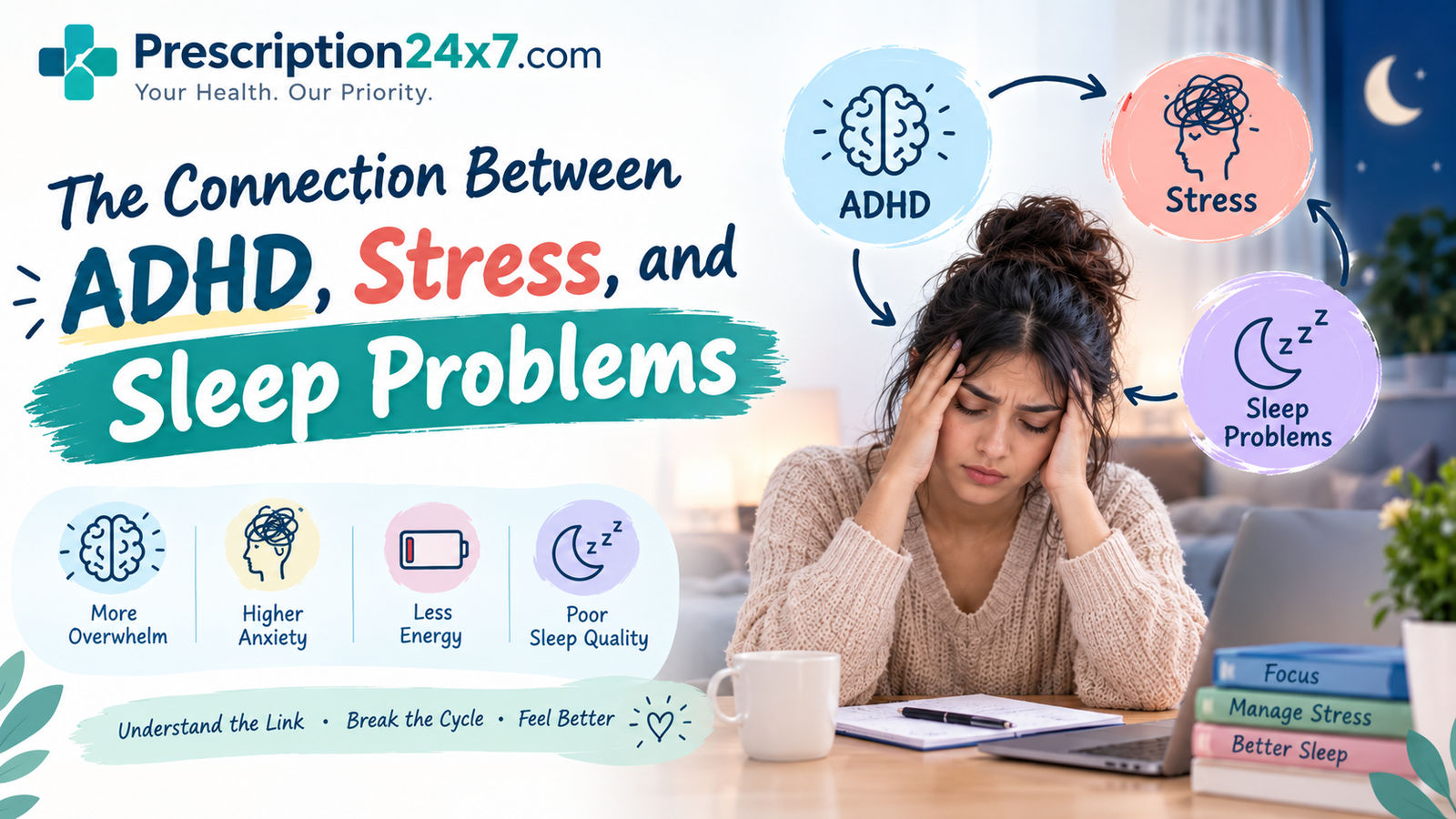
Attention-deficit/hyperactivity disorder (ADHD) can affect attention, time management, organization, and the ability to maintain consistent routines. When daily responsibilities become overwhelming, stress may increase. At the same time, difficulty falling asleep or maintaining a regular sleep schedule can make everyday challenges harder to manage.
The connection between ADHD, stress, and sleep problems can become a repeating cycle. ADHD-related difficulties may contribute to unfinished tasks and deadline pressure. Stress can make it harder to relax at night, while insufficient sleep may affect concentration, emotional regulation, and energy the following day.
Not everyone with ADHD experiences sleep difficulties in the same way, and stress is not the only possible cause. However, understanding how these factors interact can help people identify patterns, develop practical coping strategies, and recognize when professional support may be helpful.
What Is ADHD, and How Does It Affect Daily Life?
ADHD is a neurodevelopmental condition involving persistent patterns of inattention and/or hyperactivity and impulsivity that interfere with everyday functioning. In adults, symptoms may include difficulty organizing responsibilities, remembering appointments, completing lengthy tasks, managing time, or resisting distractions.
The National Institute of Mental Health's ADHD information explains that ADHD can affect functioning at work, at home, and in relationships. The CDC's guide to ADHD in adults also discusses challenges with organization, attention, and maintaining healthy routines, including adequate sleep.
For example, someone may intend to finish a work assignment early but become distracted by smaller tasks. When the deadline approaches, they may feel pressured to work late. If this pattern happens frequently, it can interfere with relaxation and sleep.
These difficulties should not automatically be interpreted as laziness or a lack of motivation. People with ADHD may benefit from practical supports, structured routines, and individualized treatment rather than relying on willpower alone.
How Are ADHD and Stress Connected?
Stress is the body's response to demands, uncertainty, or perceived pressure. Short-term stress can sometimes help people respond to challenges, but persistent stress may affect sleep, mood, concentration, and general well-being.
For people with ADHD, stress may build up when several responsibilities compete for attention or when everyday tasks require sustained organizational effort.
1. Time-management difficulties
Estimating how long a task will take, deciding what to do first, and remembering multiple commitments can be difficult for some people with ADHD. When tasks accumulate, a manageable workload may begin to feel overwhelming.
2. Procrastination and deadline pressure
A task that feels complicated, repetitive, or difficult to begin may be postponed. As the deadline approaches, stress and urgency can increase. Although working under pressure may sometimes help a person get started, repeatedly relying on last-minute effort can interfere with sleep and recovery.
Readers can explore additional strategies in this related article about stress and procrastination.
3. Emotional overload
After a demanding day, small setbacks may feel more difficult to handle. Frustration, irritability, and worry can make it harder to transition into a calm evening routine.
When this pattern continues, people may experience mental exhaustion or feel that they never have enough time to recover. Learn more about the relationship between ongoing pressure and chronic stress and emotional exhaustion.
4. Worry about mistakes and performance
Some people with ADHD become concerned about forgetting responsibilities, missing deadlines, or disappointing others. These worries may continue after work or school has finished, keeping the mind occupied when it is time to rest.
Stress can also overlap with anxiety and depression. If excessive worry, persistent sadness, or loss of interest continues, a healthcare professional can help assess the symptoms and determine what support may be appropriate.
How ADHD Can Contribute to Sleep Problems
Sleep difficulties are reported frequently among adults with ADHD, although the type and severity vary. A systematic review and meta-analysis published in Neuroscience & Biobehavioral Reviews examined subjective and objective sleep measures in adults with ADHD and found differences in several reported sleep parameters. The research also highlighted the need for more study of the underlying mechanisms. Read the systematic review of sleep in adults with ADHD on PubMed.
Common contributing factors may include the following.
Racing thoughts at bedtime
When the day becomes quieter, unfinished tasks, upcoming responsibilities, and worries may become more noticeable. A person may replay conversations, remember forgotten tasks, or mentally plan the next day.
This can make it difficult to settle down. Worrying about not falling asleep may add further pressure.
An inconsistent sleep schedule
People who struggle with time management or shifting away from absorbing activities may regularly go to bed later than intended. Watching videos, gaming, working, or starting another project can extend the evening and reduce available sleep time.
A consistent bedtime and wake-up routine can provide useful structure, even if maintaining it takes practice.
Restlessness and difficulty winding down
Some people with ADHD experience restlessness or find quiet activities difficult after a busy day. Moving from an active environment to bedtime may require a deliberate transition.
However, persistent sleep problems should not automatically be attributed to ADHD. Anxiety, depression, irregular work schedules, other sleep disorders, medical conditions, and medication effects can also contribute.
Medication-related sleep difficulties
Some ADHD medicines can affect sleep in certain individuals. The impact may depend on the medication, dose, timing, and individual response.
If sleep problems begin or worsen after starting a medication or changing its dose, discuss the pattern with the prescribing clinician. Do not stop medication, change the dose, or use another prescription medicine to induce sleep without medical guidance. The National Institute of Mental Health's information on mental health medications provides further background on medication treatment.
For additional information about ADHD and sleep, see CHADD's guide to ADHD and sleep disorders.
How Stress Can Make Sleep Problems Worse
Stress can keep the mind and body alert when they should be preparing for rest. Concerns about work, relationships, finances, or unfinished tasks may continue into the evening.
For someone with ADHD, stress may also make it harder to prioritize concerns and decide which tasks can wait until tomorrow. Instead of following a short bedtime routine, a person may begin several activities, become distracted, and feel overwhelmed by everything left to do.
Stress-related sleep difficulties may include:
Taking a long time to fall asleep despite feeling tired.
Waking during the night and struggling to return to sleep.
Thinking repeatedly about tomorrow's responsibilities.
Feeling restless or mentally alert late at night.
Waking up unrefreshed and finding the next day more difficult.
These symptoms are not unique to ADHD. Persistent sleep difficulties deserve attention in their own right, especially when they interfere with work, relationships, or everyday activities.
The ADHD, Stress, and Sleep Cycle
ADHD symptoms, stress, and sleep difficulties can reinforce one another. Consider this possible pattern:
Daily challenges: Distractions or organizational difficulties delay important tasks.
Increasing stress: Deadlines approach, and the person feels pressured to catch up.
Disrupted sleep: Work continues late into the evening, leaving less time for rest.
Daytime fatigue: Poor sleep may affect concentration, mood, and energy.
More difficulties: Tasks become harder to manage, creating additional pressure.
This pattern does not affect everyone with ADHD, but recognizing it can help identify where small changes might be useful.
For example, someone who repeatedly stays awake to complete unfinished work might benefit from breaking tasks into smaller steps, setting a stopping time, and reviewing the next day's priorities before the evening. The aim is not to complete everything perfectly; it is to build a routine that allows time for rest.
If mental exhaustion is becoming a regular experience, the related guide to ADHD burnout, its signs, and coping strategies may offer additional context.
Practical Ways to Manage ADHD, Stress, and Sleep Problems
There is no single strategy that works for everyone. Start with changes that are realistic enough to repeat, rather than attempting to change every habit at once.
1. Maintain a consistent sleep schedule
Try to wake up at approximately the same time each day and allow enough time for sleep. Most adults need around seven to nine hours, although individual needs vary.
If your schedule is very irregular, gradually adjusting it may be easier than making a sudden change. A regular wake-up time can help provide structure to the rest of the day.
2. Create a short wind-down routine
A complicated bedtime routine can be difficult to maintain. Begin with two or three simple activities, such as:
Preparing essential items for the following day.
Writing down unfinished tasks and tomorrow's priorities.
Dimming lights and reducing stimulating activities.
Reading or listening to something relaxing.
Try to finish demanding work before bedtime. Writing down an unfinished task can help you remember it without feeling that you must complete it immediately.
3. Reduce evening stimulation
Bright screens, work notifications, stimulating games, and emotionally intense content can keep some people alert. Consider setting a reminder to begin winding down and placing your phone away from the bed if it tends to distract you.
Caffeine can also interfere with sleep, particularly when consumed later in the day. Notice whether coffee, tea, or energy drinks affect your sleep and consider limiting afternoon and evening intake.
4. Break large tasks into smaller steps
Instead of writing “finish the report” on a to-do list, divide it into manageable actions:
Open the document and review the instructions.
Write three main headings.
Complete the first section.
Take a short break.
Review the remaining work and identify the next step.
Calendars, visual timers, checklists, and reminders can reduce the amount of information you need to hold in mind. These are practical supports, not measures of personal discipline.
5. Make time for stress management
Set aside a short period earlier in the day to review responsibilities, write down worries, and plan the following day. This may reduce the need to mentally work through every concern at bedtime.
Walking, gentle exercise, stretching, breathing exercises, and speaking with someone you trust may also support well-being. These strategies are not substitutes for professional care when symptoms are persistent or severe.
6. Protect time for recovery
A schedule filled with work, errands, and obligations may leave little time to recover from stress. Where possible, build in breaks, set realistic expectations, and avoid unnecessary commitments.
If you regularly stay up late to catch up, consider whether the workload, available support, or task structure needs to change. Consistently sacrificing sleep to finish everything may worsen the cycle over time.
7. Review treatment options with a healthcare professional
If ADHD symptoms remain difficult to manage, a qualified healthcare professional can review the treatment plan and discuss appropriate support. Depending on the individual's needs, care may include medication, psychological therapy, behavioral strategies, or a combination.
For more information about treatment and assessment, consult the NHS guide to ADHD in adults and the CDC's ADHD resources for adults.
Medication decisions should be made with a qualified prescriber. Do not use someone else's ADHD medication or take prescription medicines for stress or sleep without medical guidance.
When Should You Seek Professional Help?
Consider speaking with a healthcare professional if sleep problems continue despite reasonable changes to your routine, daytime fatigue interferes with functioning, or stress becomes difficult to manage.
Professional assessment is especially important if:
You regularly struggle to fall asleep or stay asleep.
Fatigue affects concentration, driving, work, or relationships.
Anxiety, low mood, or irritability persists.
ADHD symptoms are becoming harder to manage.
You experience loud snoring, gasping during sleep, or other possible signs of a sleep disorder.
Sleep difficulties begin or worsen after a medication change.
ADHD, anxiety, depression, and sleep disorders can overlap. A clinician can review symptoms and consider other possible causes rather than assuming everything is related to ADHD.
For more information about overlapping symptoms, read about when anxiety and depression happen together. If you are also experiencing ongoing low energy or physical discomfort, the related article on depression, fatigue, and muscle pain may be useful.
Frequently Asked Questions
1. Can ADHD cause sleep problems?
ADHD is associated with sleep difficulties in some people, including trouble falling asleep and maintaining a regular schedule. However, sleep problems can have several causes and should be assessed if they persist.
2. Can stress make ADHD symptoms worse?
Stress may make concentration, organization, emotional regulation, and everyday task management more difficult. It can also disrupt sleep, which may further affect attention and mood.
3. Why does my mind feel busy when I try to sleep?
Unfinished tasks, worries, and thoughts about the next day can make it difficult to relax. A short wind-down routine and writing down tomorrow's priorities may help some people settle more easily.
4. Does poor sleep make ADHD worse?
Insufficient or disrupted sleep can affect attention, memory, mood, and impulse control. These effects may make existing ADHD-related challenges more noticeable.
5. How much sleep should adults with ADHD get?
Most adults need approximately seven to nine hours of sleep per night, although individual needs vary. Persistent tiredness despite allowing enough time for sleep may warrant medical assessment.
6. Can ADHD medication cause insomnia?
Some ADHD medications can contribute to sleep difficulties in certain people. Discuss new or worsening sleep problems with the prescribing clinician rather than changing the dose independently.
7. What is a helpful bedtime routine for someone with ADHD?
A simple routine may include preparing for the next day, reducing screen stimulation, following a consistent wake-up time, and choosing a relaxing activity. The most useful routine is one that fits the person's needs and can be maintained.
8. When should I see a doctor about ADHD and sleep?
Seek professional advice if sleep problems persist, daytime fatigue affects daily functioning, or anxiety and low mood become difficult to manage. A clinician can assess ADHD symptoms and consider other sleep or health conditions.
Conclusion
The connection between ADHD, stress, and sleep problems can create a frustrating cycle. Daily organizational challenges may increase stress, stress can interfere with sleep, and poor sleep may make attention and emotional regulation more difficult the following day.
Recognizing this pattern can help people focus on practical changes rather than blaming themselves. Consistent sleep and wake times, smaller task lists, reduced evening stimulation, realistic commitments, and appropriate professional support can all play a role in managing these difficulties.
If sleep problems or stress continue to affect daily life, speak with a qualified healthcare professional. Addressing sleep, stress, and ADHD together may provide a clearer path toward better daily functioning and well-being.