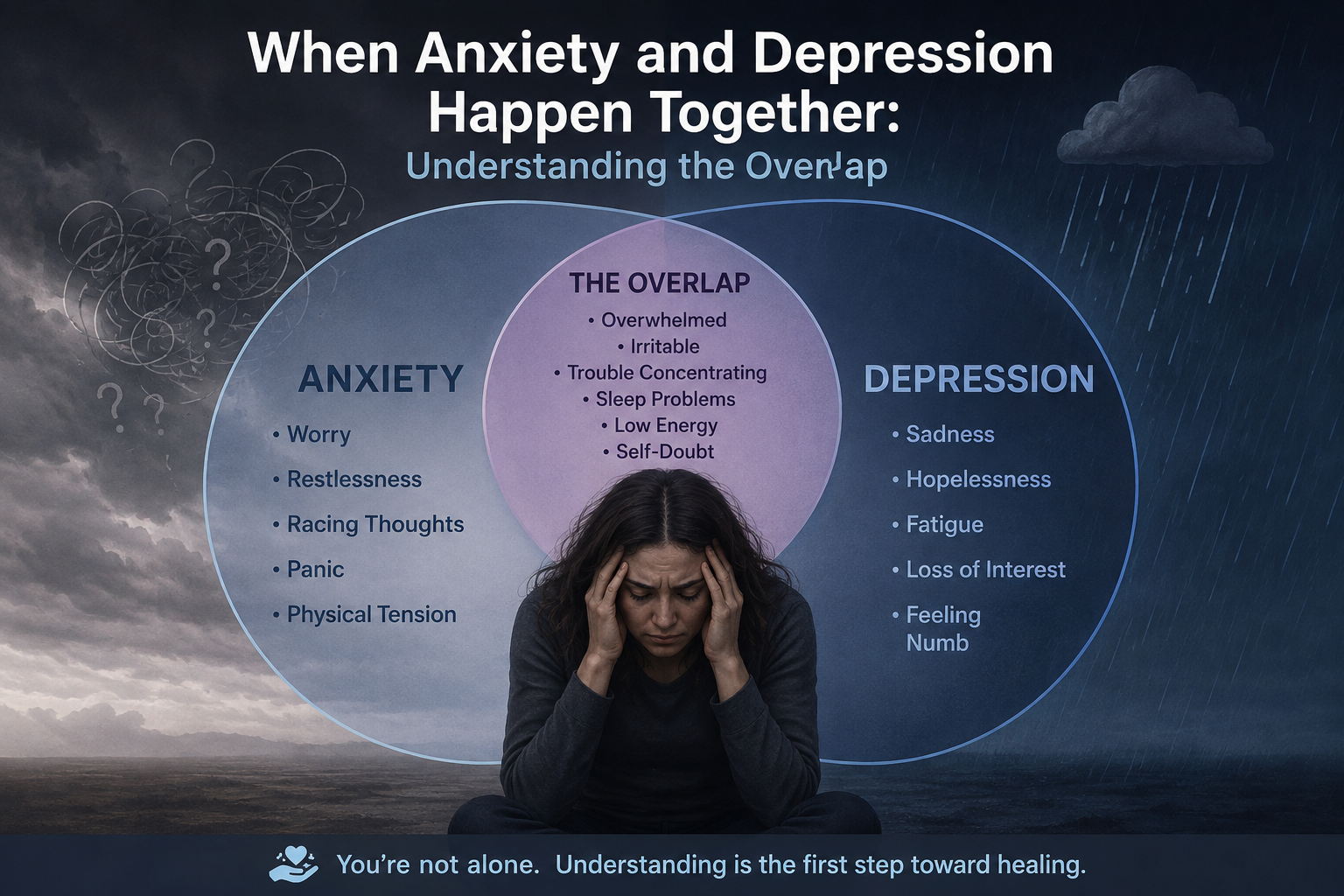
Anxiety and depression are often discussed as separate mental-health conditions. Anxiety is commonly associated with worry and fear, while depression is often associated with sadness and loss of interest.
But real life isn't always that simple.
Anxiety and depression can occur at the same time, and when they overlap, the experience can be confusing. Someone may feel constantly worried yet completely exhausted, unable to relax yet unable to find motivation, or overwhelmed by the future while simultaneously feeling hopeless about it.
The two conditions are different, but they can share symptoms and frequently occur together.
What Does Anxiety Feel Like?
Anxiety is more than occasional nervousness.
Everyone experiences anxiety from time to time, particularly during stressful situations. Anxiety disorders, however, involve symptoms that can persist, become difficult to control, and interfere with everyday life.
Depending on the type of anxiety, someone might experience:
Excessive worrying
Feeling constantly "on edge"
Restlessness
Difficulty relaxing
Muscle tension
Irritability
Trouble concentrating
Sleep problems
Racing thoughts
Physical symptoms such as sweating, trembling, headaches, or stomach discomfort
The National Institute of Mental Health's anxiety information provides an overview of different anxiety disorders, their symptoms, and treatment approaches.
What Does Depression Feel Like?
Depression isn't simply having a bad day.
Clinical depression can affect how a person feels, thinks, behaves, sleeps, eats, works, and interacts with other people. Common symptoms include persistent low mood, loss of interest or pleasure, fatigue, difficulty concentrating, sleep changes, appetite changes, feelings of worthlessness or hopelessness, and sometimes thoughts of death or suicide.
Someone experiencing depression might think:
"I don't enjoy anything anymore."
"Everything feels like too much effort."
"I don't see where my life is going."
"I just want to be left alone."
Not everyone with depression experiences every symptom, and symptoms can vary considerably between individuals.
How Can Anxiety and Depression Exist Together?
The overlap becomes easier to understand when you look at the way each condition can affect the other.
Anxiety can keep the brain focused on what might go wrong.
Depression can make someone feel that nothing will get better.
Put them together and a person might spend hours worrying about the future while simultaneously feeling hopeless about it.
For example:
Anxiety: "What if everything goes wrong?"
Depression: "Even if I try, it won't matter."
That combination can be emotionally exhausting.
Research and clinical guidance recognize that anxiety and depression commonly co-occur.
The Anxiety–Depression Cycle
For some people, the symptoms can create a cycle.
Imagine someone constantly worrying about work, finances, relationships, or health.
That persistent worry can interfere with sleep.
Poor sleep can contribute to fatigue and difficulty concentrating.
Feeling exhausted can make everyday responsibilities harder.
Falling behind can create more worry.
Eventually, the person may withdraw from friends and activities they once enjoyed.
That withdrawal can contribute to low mood and loss of interest.
The cycle can look something like this:
Worry → poor sleep → exhaustion → withdrawal → low mood → more worry → greater exhaustion
This isn't necessarily how everyone's symptoms develop, but it illustrates why treating only one part of the problem may not always be enough.
Why Someone Can Feel Both "Wired" and Exhausted
One of the most confusing combinations is feeling physically restless but mentally and emotionally exhausted.
An anxious person may feel like they can't sit still.
A depressed person may struggle to get out of bed.
When both sets of symptoms occur together, someone may experience both at different times—or even simultaneously.
They might spend hours worrying, checking their phone, pacing, or thinking about possible problems, and then feel completely drained afterward.
NIMH notes that anxiety can involve restlessness, fatigue, concentration problems, muscle tension, and sleep difficulties.
Why Concentration Can Become Difficult
Both anxiety and depression can interfere with concentration.
Anxiety may fill your attention with worries:
"What if this happens?"
"Did I make a mistake?"
"What will they think?"
Depression, meanwhile, can make thinking and decision-making feel unusually difficult.
The result can be frustrating.
You may sit in front of a simple task for an hour without being able to focus on it.
This doesn't necessarily mean you're lazy or lacking discipline.
Mental-health symptoms can affect cognitive functioning and everyday performance.
Sleep Can Become Part of the Problem
Sleep and mental health are closely connected.
Anxiety may make it difficult to fall asleep because your thoughts won't slow down.
Depression can lead to sleeping too much, waking early, or experiencing disrupted sleep.
Either way, poor sleep can leave you feeling less emotionally resilient the following day.
This can create another cycle:
Anxiety/depression → disrupted sleep → fatigue → reduced coping ability → worsening symptoms
That is one reason sleep is often an important part of a broader mental-health treatment plan.
Physical Symptoms Can Be Part of the Picture
Mental-health symptoms aren't necessarily "all in your head."
Anxiety can produce physical sensations such as muscle tension, headaches, stomach discomfort, sweating, trembling, and shortness of breath.
Depression can also be associated with physical aches, headaches, digestive problems, fatigue, and other physical symptoms.
This can make the experience even more confusing.
Someone may visit a healthcare professional because their body doesn't feel right without initially realizing that anxiety or depression may also be contributing.
That doesn't mean physical symptoms should automatically be blamed on mental health. A healthcare professional can help determine whether another medical condition is involved.
Why People May Not Recognize the Overlap
One reason is that people have stereotypes about what anxiety and depression are supposed to look like.
They may think:
Anxiety = panic
Depression = crying
But neither is necessarily true.
Anxiety may look like irritability, perfectionism, constant planning, reassurance-seeking, physical tension, or inability to relax.
Depression may look like withdrawal, exhaustion, irritability, emotional numbness, loss of motivation, or difficulty completing ordinary responsibilities.
Someone can continue working, attending school, caring for their family, and interacting socially while struggling internally.
Can Anxiety Cause Depression?
The relationship isn't always straightforward.
A person may develop anxiety first and later experience depression after living with persistent worry and impairment.
Someone else may develop depression first and subsequently experience significant anxiety.
Sometimes both develop around the same period.
Mayo Clinic notes that major depression and anxiety disorders are different conditions but commonly occur together, and that one can sometimes precede the other.
It's therefore more useful to look at the whole pattern of symptoms and their impact rather than trying to decide which condition "came first."
How Are Anxiety and Depression Treated?
Treatment depends on the individual.
Common approaches include psychotherapy, medication, or a combination of both.
Psychotherapy
Therapy can help people understand patterns of thoughts, emotions, and behaviors and develop healthier ways of responding.
Cognitive behavioral therapy, or CBT, is one evidence-based approach commonly used for anxiety and depression. NIMH explains that psychotherapy can be delivered in person or through telehealth and can address both anxious and depressive symptoms.
Other forms of therapy may also be appropriate depending on the individual's symptoms and circumstances.
Medication
Healthcare professionals may prescribe medication when appropriate.
Some antidepressants, including SSRIs and SNRIs, are used to treat both depression and certain anxiety disorders.
Medication decisions should be individualized because the right treatment depends on symptoms, medical history, other medications, side effects, preferences, and other factors.
It's also important not to start, stop, or change psychiatric medication without guidance from the prescribing healthcare professional.
Lifestyle Changes Can Support Treatment
Healthy habits aren't a replacement for professional treatment when someone has a significant mental-health condition, but they can complement treatment.
Useful areas to consider include:
Regular sleep
Try to maintain a consistent sleep and wake schedule.
Physical activity
Regular movement can support overall physical and mental well-being.
Social connection
Even when depression makes you want to withdraw, maintaining some connection with trusted people can be valuable.
Reducing excessive caffeine
Some people find that high caffeine intake makes anxiety symptoms more noticeable.
Creating manageable routines
When everything feels overwhelming, breaking responsibilities into smaller steps can make them more manageable.
NIMH notes that healthy habits such as adequate sleep, exercise, stress-management practices, and reducing caffeine can support anxiety treatment, although these measures don't replace standard treatment.
When Should You Talk to a Professional?
Consider speaking with a healthcare or mental-health professional if symptoms:
Persist for weeks
Keep getting worse
Interfere with work or school
Affect relationships
Disrupt sleep significantly
Make everyday responsibilities difficult
Cause significant physical symptoms
Lead you to withdraw from activities you previously enjoyed
You don't have to wait until symptoms become severe.
A primary-care provider can be a reasonable starting point and can help determine whether symptoms may be related to anxiety, depression, another medical condition, medication effects, or a combination of factors.
What About Thoughts of Suicide?
Depression can sometimes involve thoughts of death or suicide, and this requires immediate attention.
If you or someone else is experiencing suicidal thoughts or feels unable to stay safe, seek immediate professional help. In the U.S., you can call or text 988 for the Suicide & Crisis Lifeline; if there is an immediate life-threatening emergency, call 911.
Final Thoughts
Anxiety and depression don't always arrive separately.
One can involve too much fear about what might happen, while the other can involve too little hope that things can improve.
When they overlap, the experience may include worry, exhaustion, irritability, poor concentration, sleep problems, withdrawal, physical tension, and loss of interest—all at the same time.
Recognizing the overlap is important because it reminds us that mental health isn't always neatly divided into categories.
If you recognize yourself in these symptoms, it doesn't mean you have to diagnose yourself. It means your experience may be worth discussing with a qualified healthcare professional.
You don't have to wait until you completely stop functioning before asking for help. Sometimes recognizing the pattern is the first step toward changing it.