Depression is often thought of as an emotional condition characterized by sadness, hopelessness, or loss of interest. But for many people, depression can also have a very physical side.
You may feel exhausted even after sleeping. Your body may feel heavy. Everyday activities may require more effort than they used to. You may experience headaches, muscle aches, back discomfort, or unexplained body pain.
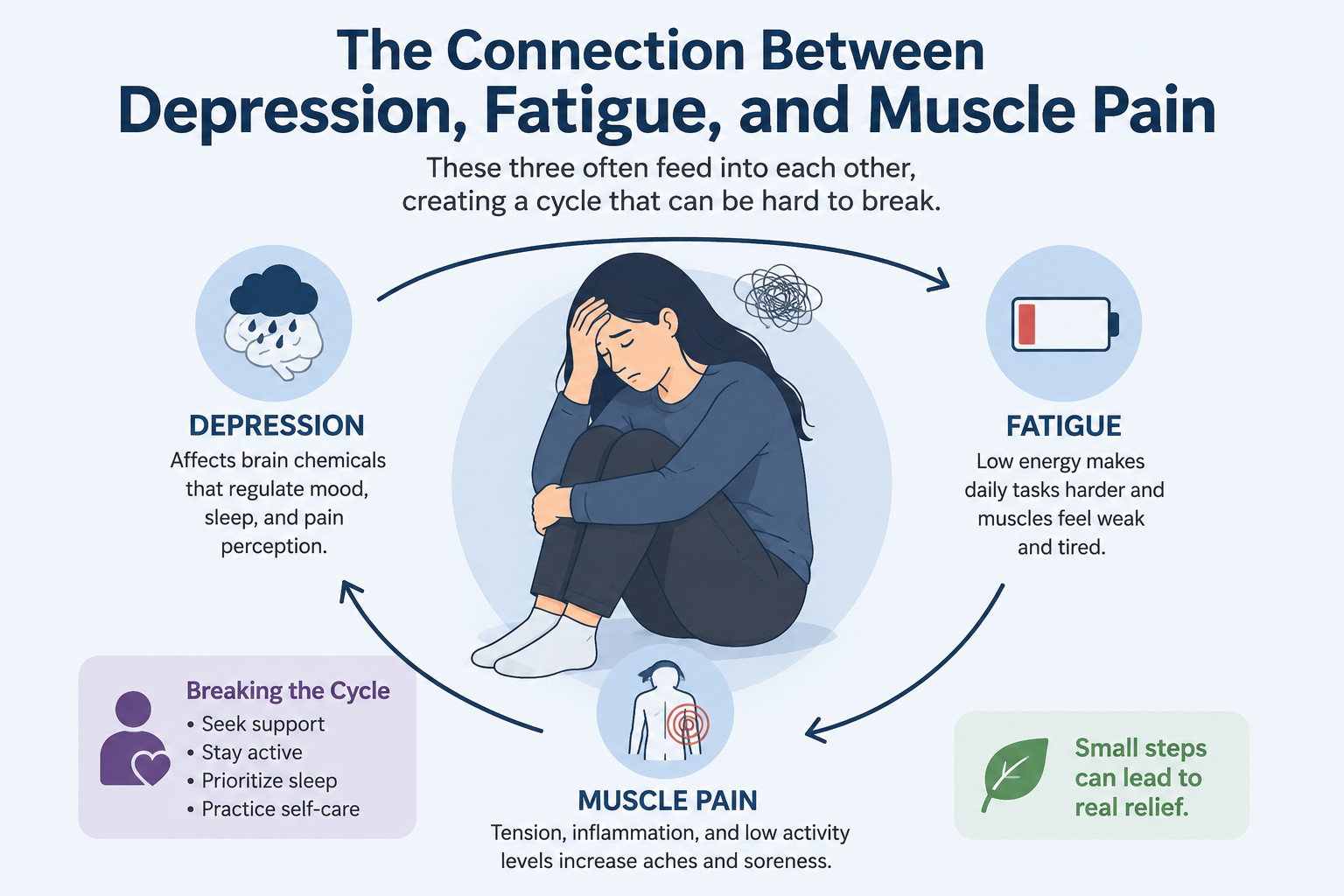
These symptoms can sometimes become a frustrating cycle:
Depression → poor sleep and low activity → fatigue → muscle tension or discomfort → less activity → worsening mood
The relationship isn't always straightforward, and physical symptoms can have many causes. But understanding how depression, fatigue, and pain can interact may help you recognize when it's time to seek professional support.
The National Institute of Mental Health (NIMH) lists fatigue, lack of energy, feeling slowed down, and physical aches or pains among possible symptoms of depression.
Can Depression Really Cause Physical Pain?
Yes. Depression can involve physical symptoms in addition to emotional and cognitive symptoms.
Some people experiencing depression may notice:
NIMH specifically notes that depression can occur alongside chronic pain and that some people experience physical aches or pains without an obvious physical cause.
This doesn't mean physical pain is "all in your head."
Pain is a real physical experience, even when psychological factors are contributing to it.
That's an important distinction.
Why Does Depression Make You Feel So Tired?
Depression-related fatigue isn't necessarily the same as simply being sleepy after a long day.
You might sleep for several hours and still wake up feeling as though you have no energy.
You may find simple tasks exhausting:
Getting dressed
Preparing food
Cleaning your home
Going to work
Exercising
Socializing
Answering messages
Shopping for groceries
MedlinePlus describes fatigue as a feeling of weariness, tiredness, or lack of energy and notes that depression, persistent pain, sleep disorders, and several medical conditions can contribute to fatigue.
One important point:
Fatigue is a symptom, not a diagnosis.
If you're tired for weeks without a clear explanation, don't automatically assume depression is the cause.
Anemia, thyroid problems, sleep apnea, infections, medications, chronic pain, and other conditions can also cause fatigue.
The Depression–Fatigue–Pain Cycle
One of the most useful ways to understand these symptoms is to look at how they can influence one another.
Imagine someone wakes up feeling exhausted because they've been sleeping poorly.
Because they're exhausted, they skip their usual walk.
Less movement makes their body feel stiff.
The stiffness contributes to discomfort.
The discomfort makes them even less interested in exercising.
They begin spending more time alone.
Their mood drops further.
Then they have another difficult night of sleep.
The cycle starts again.
It can look like this:
Low mood
↓
Poor sleep / reduced motivation
↓
Fatigue
↓
Less physical activity
↓
Stiffness and pain
↓
More frustration and isolation
↓
Worsening mood
This isn't inevitable, but it can happen.
MedlinePlus describes a similar relationship between chronic pain, emotional distress, reduced activity, and worsening pain.
How Depression Can Affect Your Muscles
Depression itself isn't necessarily a direct cause of every muscle ache.
Instead, several factors associated with depression can contribute to physical discomfort.
1. Reduced Physical Activity
When you're depressed, activities that once felt normal can suddenly seem overwhelming.
You might stop:
Spending more time sitting or lying down can contribute to stiffness and reduced physical conditioning.
It notes that depression-related fatigue can make it harder to maintain activities that support physical health.
2. Poor Sleep
Depression and sleep problems often occur together.
You might:
Poor sleep can make fatigue worse, while fatigue can make it harder to maintain normal daily routines.
3. Stress and Muscle Tension
Depression can occur alongside stress and anxiety.
When you're stressed, your muscles may remain tense for long periods.
You might unconsciously:
Over time, persistent muscle tension can contribute to discomfort and fatigue.
MedlinePlus explains that stress can cause muscle tension and can contribute to fatigue and sleep problems.
Why Does Pain Sometimes Make Depression Worse?
The relationship works in both directions.
Depression can make coping with pain more difficult.
But chronic pain can also contribute to depression.
Imagine having back pain every morning.
You stop exercising because movement hurts.
Then you start declining invitations because you don't feel comfortable going out.
Eventually, you spend more time alone.
You become frustrated because your normal life feels restricted.
Your mood declines.
This is one reason chronic pain and depression frequently occur together.
notes that people with chronic disease—including chronic pain—have a higher risk of depression, while depression itself is associated with increased risk of some chronic health problems, including pain.
Can Depression Make Existing Muscle Pain Feel Worse?
It can.
Pain isn't determined only by what's happening in the muscles or joints.
Your nervous system, emotions, attention, sleep, stress levels, and overall health can all influence how you experience pain.
MedlinePlus notes that psychological factors such as mood and stress can make chronic pain worse.
This can create a frustrating situation where the original physical problem hasn't necessarily become dramatically worse, but the person's overall experience of pain has changed.
For example:
Pain → worry → stress → poor sleep → fatigue → reduced activity → more discomfort
That's why addressing both physical and emotional factors can be important when someone has persistent pain.
Why Does Everything Feel Like So Much Effort?
One of the less-discussed aspects of depression is how it can change your perception of effort.
Something that used to take 10 minutes may suddenly feel like a huge task.
Taking a shower.
Making breakfast.
Going for a walk.
Answering an email.
Cleaning your room.
Even getting dressed.
This isn't necessarily laziness.
Depression can involve low energy, reduced motivation, slowed thinking, and difficulty carrying out normal responsibilities.
Understanding this distinction can be important.
Instead of thinking:
"I'm just being lazy."
you might recognize:
"I'm struggling with energy and motivation, and I may need support."
7 Signs Your Fatigue May Need Professional Evaluation
Fatigue deserves attention when it becomes persistent or interferes with everyday life.
Consider speaking with a healthcare professional if:
Your fatigue lasts for several weeks
You're sleeping but still feel exhausted
You have unexplained muscle or body pain
Your concentration has noticeably declined
You're struggling to work or study
You're withdrawing from friends and family
You have major changes in sleep or appetite
You have persistent low mood
You have lost interest in things you normally enjoy
Your physical symptoms are getting worse
MedlinePlus recommends medical evaluation when fatigue persists despite adequate sleep, nutrition, and reduced stress.
What Can You Do If Depression, Fatigue, and Pain Are Happening Together?
You don't necessarily need to solve everything at once.
When you're exhausted and depressed, trying to completely overhaul your lifestyle can feel impossible.
Instead, focus on small, repeatable steps.
1. Start With Very Small Amounts of Movement
If you haven't exercised for months, don't immediately attempt an intense workout.
Try:
The goal initially isn't athletic performance.
It's simply reintroducing movement.
If pain is significant, ask a healthcare professional or physical therapist what level of activity is appropriate.
2. Create a Consistent Sleep Schedule
Try to keep your sleep and wake times relatively consistent.
You can also:
Create a relaxing bedtime routine
Reduce stimulating activities before bed
Keep your bedroom comfortable
Avoid excessive caffeine late in the day
Discuss persistent insomnia with a professional
Don't assume that sleeping much longer will automatically solve fatigue.
If you're consistently exhausted despite adequate sleep, the underlying cause deserves evaluation.
3. Eat Regularly
Depression can affect appetite.
Some people lose interest in food, while others eat more than usual.
Try to maintain regular meals and adequate hydration rather than relying on caffeine or energy drinks to get through the day.
4. Stay Connected
Depression can encourage isolation.
You don't necessarily need to attend a large social gathering.
Start small.
Send a message.
Call someone.
Take a short walk with a friend.
Have coffee with someone you trust.
Social connection can help prevent depression from becoming increasingly isolating.
5. Don't Ignore the Pain
If you're experiencing persistent muscle pain, don't simply assume:
"It's because I'm depressed."
Pain can have many causes.
Depending on your symptoms, a healthcare professional may consider:
Muscle or joint problems
Nerve-related conditions
Sleep disorders
Nutritional deficiencies
Thyroid problems
Medication effects
Chronic pain conditions
Mental-health factors
A proper evaluation can help determine what needs attention.
Can Therapy Help With Depression and Pain?
For some people, yes.
Psychological treatments can help people develop strategies for coping with chronic pain and depression.
Cognitive behavioral therapy (CBT), for example, can help people identify unhelpful thought patterns, develop coping strategies, and gradually return to meaningful activities.
MedlinePlus notes that CBT is commonly used in chronic pain care and can help people manage the emotional and behavioral effects of pain.
This doesn't mean a therapist is saying:
"Your pain isn't real."
It's closer to:
"Your pain is real, and let's find ways to reduce how much it controls your life."
When Should You Seek Medical Help for Muscle Pain?
Muscle pain isn't automatically caused by depression.
It's especially important to seek medical evaluation if your pain:
Is severe or rapidly worsening
Follows a significant injury
Is associated with significant weakness
Is accompanied by unexplained fever
Causes substantial difficulty moving
Is associated with numbness or other neurological symptoms
Persists without an obvious explanation
Is interfering significantly with everyday activities
Persistent pain may require evaluation to identify its underlying cause.
Depression and Pain Can Affect Your Daily Routine
The combination can quietly change the way you live.
You may start:
Taking fewer walks
Avoiding stairs
Spending more time in bed
Canceling plans
Working less efficiently
Avoiding hobbies
Eating irregularly
Sleeping at unusual times
Ignoring responsibilities
At first, these changes may seem temporary.
But over time, they can become your new routine.
That's why recognizing the pattern early can be valuable.
Chronic pain can affect work, relationships, physical activity, mood, and sleep, creating consequences that extend far beyond the original pain itself.
The Most Important Thing to Remember
If you're experiencing depression, fatigue, and muscle pain together, don't blame yourself.
You're not necessarily lazy.
You're not necessarily weak.
And you don't have to assume that everything is "just in your head."
These symptoms can interact in complicated ways.
At the same time, don't assume depression is responsible for every physical symptom. Fatigue and muscle pain have numerous possible causes, and a healthcare professional can help determine what's going on.
Final Thoughts
The connection between depression, fatigue, and muscle pain can become a difficult cycle.
Depression can contribute to low energy, sleep problems, reduced activity, and physical aches. Persistent pain can then make movement and daily activities more difficult, potentially worsening mood and fatigue.
The good news is that addressing one part of the cycle can sometimes make the other parts easier to manage.
Start small.
Move when you're able.
Prioritize sleep.
Maintain regular meals.
Stay connected with supportive people.
Don't ignore persistent physical symptoms.
And if depression or pain is interfering with your daily life, talk to a qualified healthcare professional rather than trying to push through it alone.
For additional information, readers can explore the National Institute of Mental Health's depression resources and MedlinePlus information on chronic pain.
Depression can make the body feel heavy, pain can make life feel smaller, and fatigue can make everything seem harder—but these symptoms deserve attention and support, not judgment.
Frequently Asked Questions
Can depression cause muscle pain?
Depression can be associated with physical aches and pains, including muscle discomfort. However, persistent pain can have many possible causes and shouldn't automatically be attributed to depression.
Why am I always tired and sore?
Fatigue and soreness can occur for many reasons, including depression, poor sleep, persistent pain, anemia, thyroid disorders, infections, medications, and other health conditions. Persistent unexplained fatigue should be discussed with a healthcare professional.
Can chronic pain cause depression?
Yes. Living with persistent pain can affect sleep, physical activity, work, relationships, and emotional well-being, and people with chronic pain have an increased risk of depression.
Can depression make chronic pain worse?
Depression and stress can influence how a person experiences and copes with chronic pain.
Should I exercise if depression makes me exhausted?
Gentle activity may be helpful for many people, but the appropriate level depends on your health and any underlying pain or medical conditions. Start gradually and seek professional advice if you're unsure what is safe.
When should I talk to a doctor about depression?
If symptoms persist, interfere with your daily life, or include significant changes in sleep, appetite, energy, concentration, or interest in activities, consider speaking with a healthcare professional. NIMH notes that depression symptoms can substantially interfere with everyday functioning.
What if depression includes thoughts of suicide?
Thoughts of suicide or self-harm require immediate professional attention. In the U.S., NIMH directs people to call or text 988 for the Suicide & Crisis Lifeline; in an immediate life-threatening emergency, contact local emergency services.