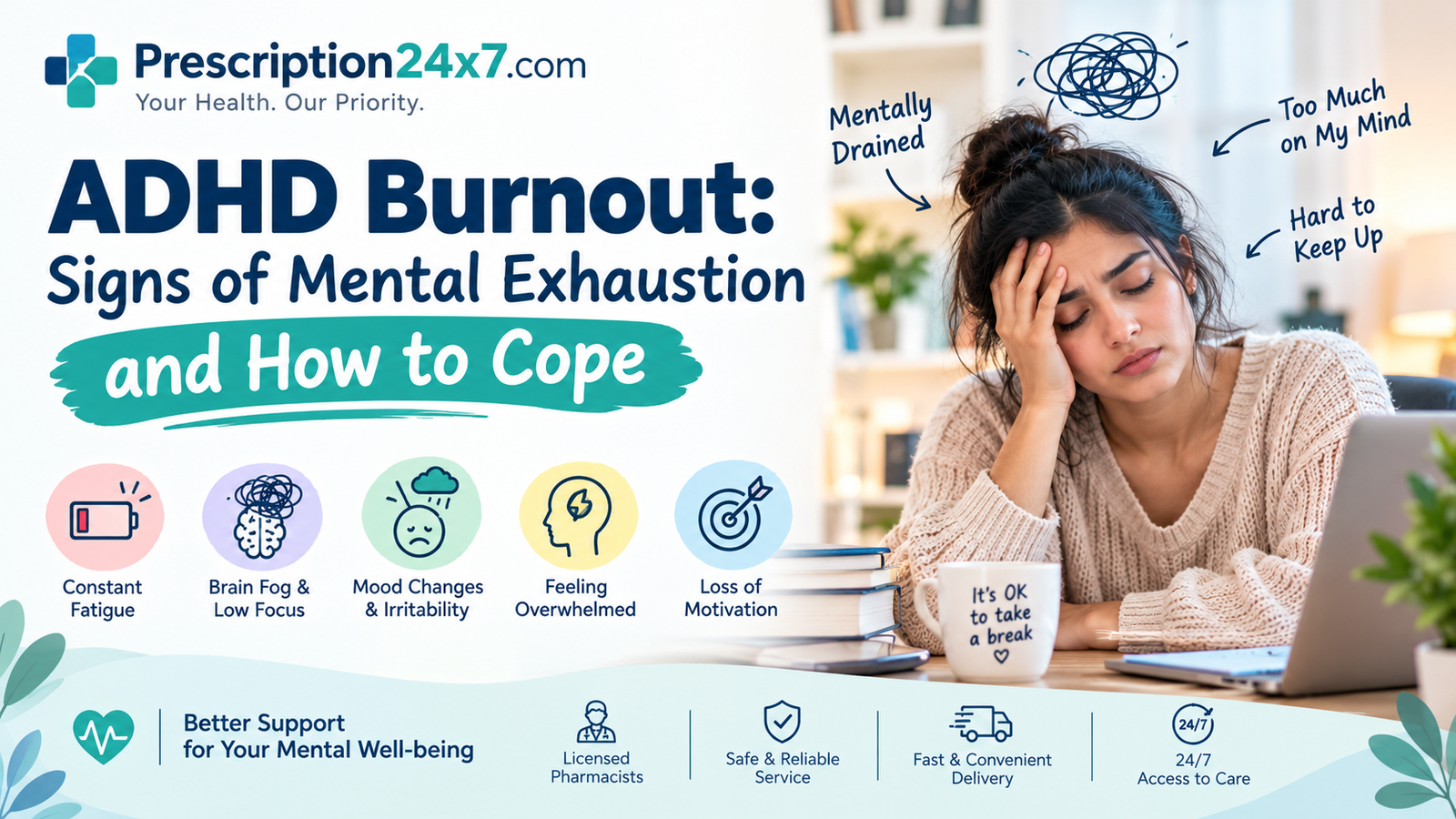
Living with attention-deficit/hyperactivity disorder (ADHD) can involve more than difficulty concentrating or staying organized. Everyday responsibilities, time-management challenges, emotional overload, and constant efforts to keep up with expectations can become exhausting. When these pressures build over time, some people with ADHD describe feeling mentally drained, overwhelmed, or unable to manage tasks that previously seemed manageable.
ADHD burnout is an informal term used to describe a state of significant exhaustion and reduced ability to cope with everyday demands in the context of ADHD. It is not a formal medical diagnosis, but the experience can be distressing and may affect work, relationships, sleep, motivation, and overall well-being.
Understanding the connection between ADHD and chronic stress can help people recognize warning signs earlier and develop more realistic ways to manage their responsibilities. This guide explores common signs of ADHD-related exhaustion, factors that may contribute to it, practical coping strategies, and when professional support may be appropriate.
What Is ADHD Burnout?
ADHD burnout generally describes a period when the mental effort required to manage everyday life begins to feel unsustainable. A person may struggle to organize tasks, manage distractions, regulate emotions, or maintain routines while also dealing with increasing fatigue and stress.
The term is not an official ADHD subtype or a separate diagnosis. Similar symptoms can also occur with depression, anxiety, sleep disorders, prolonged stress, and other health conditions. A healthcare professional can help identify what may be contributing to the difficulties.
According to the National Institute of Mental Health's ADHD guide, ADHD can affect attention, impulse control, organization, and daily functioning. These challenges may become harder to manage when demands increase or adequate support is unavailable.
For some people, burnout-like experiences develop after months of trying to compensate for difficulties with planning, deadlines, household responsibilities, or work. Others may notice a decline during a major life change, a period of poor sleep, or ongoing personal stress.
Related reading: Prescription24x7's guide to how chronic stress can contribute to emotional exhaustion.
Common Signs of ADHD Burnout
ADHD burnout can look different from one person to another. Some people mainly experience mental fatigue, while others notice increased emotional sensitivity, reduced concentration, or difficulty keeping up with everyday responsibilities.
1. Persistent Mental Exhaustion
You may feel mentally tired even after completing relatively ordinary tasks. Planning a workday, answering messages, remembering appointments, or deciding what to do next can require more effort than usual.
This type of exhaustion may become more noticeable when several responsibilities compete for attention at the same time.
2. Increased Difficulty Concentrating
People with ADHD may already experience difficulties sustaining attention or completing lengthy tasks. During periods of significant stress or exhaustion, these challenges may feel more difficult to manage.
You might repeatedly reread instructions, lose track of conversations, forget what you intended to do, or switch between tasks without finishing them.
The CDC's information about ADHD in adults explains that ADHD can affect organization, attention, task completion, and everyday functioning, particularly when demands are high.
3. Procrastination and Task Avoidance
When you feel overwhelmed, starting a task can seem almost as difficult as completing it. You may postpone an email, avoid an important phone call, or delay a project because you cannot decide where to begin.
Unfortunately, avoiding tasks can create a cycle in which unfinished responsibilities increase stress, making it even harder to start.
Read more about stress and procrastination, including why feeling overwhelmed can make ordinary tasks harder to approach.
4. Irritability and Emotional Overload
You may become frustrated more quickly, feel unusually sensitive to criticism, or find it difficult to recover after a stressful interaction.
These experiences do not automatically indicate burnout, and emotional regulation difficulties can have several causes. However, a noticeable change in how you respond to everyday pressure deserves attention.
5. Sleep Problems and Low Energy
Stress, inconsistent routines, and difficulty winding down can interfere with sleep. Poor sleep can then contribute to tiredness, irritability, and reduced concentration during the day.
If exhaustion continues despite efforts to rest, consider discussing it with a healthcare professional rather than assuming it is entirely related to ADHD.
6. Withdrawing From Responsibilities or Relationships
During periods of overload, some people reduce social activities, postpone household tasks, or avoid messages because responding feels demanding.
Occasional rest is normal. However, persistent withdrawal, loss of interest, or difficulty meeting basic responsibilities may signal that additional support is needed.
Why Can ADHD Increase the Risk of Feeling Overwhelmed?
ADHD affects people differently, and not everyone with ADHD experiences burnout. However, several challenges associated with the condition may contribute to prolonged stress.
Executive-function demands
Executive functions help people plan, prioritize, organize, remember instructions, and move between tasks. When these activities require considerable effort, an ordinary day can involve many small decisions and adjustments.
For example, someone may need to remind themselves repeatedly to begin a report, monitor the time, ignore distractions, and remember several other deadlines. By the end of the day, this sustained effort may feel exhausting.
Repeated deadline pressure
Difficulty estimating time or breaking down large tasks can make deadlines harder to manage. Delaying a task may provide temporary relief, but approaching deadlines can increase anxiety and create a rush to finish.
Over time, repeatedly working under pressure may leave less opportunity for rest and recovery.
Trying to meet unrealistic expectations
Some people feel they must work harder than others to achieve the same results. They may compensate for organizational difficulties by spending extra hours working, checking everything repeatedly, or avoiding breaks.
When these efforts become routine, it can be difficult to recognize the need for a more sustainable approach.
Chronic stress and emotional strain
Long-term stress may affect sleep, mood, concentration, and daily functioning. For someone already managing ADHD symptoms, additional pressure may make established coping strategies less effective.
For a related perspective, read Prescription24x7's article on when anxiety and depression happen together.
ADHD Burnout vs. Depression: What Is the Difference?
ADHD burnout and depression can share symptoms, including fatigue, reduced motivation, concentration problems, and difficulty completing tasks. They are not the same thing, and they can also occur together.
Feature | ADHD-related burnout experience | Depression |
Common experience | Feeling depleted by ongoing demands and coping efforts | Persistent low mood or reduced interest or pleasure |
Relationship to demands | May become more noticeable during periods of overload | May persist even when immediate demands decrease |
Concentration | May become harder when stress and exhaustion increase | May be affected alongside mood and energy |
Emotional experience | May include frustration, overwhelm, or feeling unable to keep up | May include hopelessness, worthlessness, sadness, or loss of interest |
Next step | Review demands, routines, ADHD support, and possible health contributors | Seek assessment when symptoms persist or interfere with daily life |
This comparison is not a diagnostic tool. Symptoms overlap, and there is no single sign that reliably distinguishes one condition from another.
Depression may involve persistent sadness, loss of interest, changes in sleep or appetite, low energy, feelings of worthlessness, or thoughts of death. If these symptoms develop or continue, seek an assessment from a qualified healthcare professional.
Prescription24x7 also covers the relationship between depression, fatigue, and muscle pain. Reading educational information can be useful, but it cannot replace an individual assessment.
How to Cope With ADHD Burnout
Recovering from burnout-like exhaustion does not require fixing every habit at once. A more manageable starting point is to reduce unnecessary demands, protect time for recovery, and make daily responsibilities easier to organize.
1. Reduce Your Task List
When everything feels urgent, prioritizing can become difficult. Instead of creating a long list of everything you need to accomplish, identify one essential task and a few smaller responsibilities.
Separate tasks into three groups:
Needs attention today: Essential responsibilities with real deadlines or consequences.
Can wait: Tasks that are important but not immediately urgent.
Can be reduced or delegated: Responsibilities that do not need to be completed by you or completed right now.
This helps make the day more realistic and reduces the pressure to handle everything simultaneously.
2. Break Large Tasks Into Smaller Steps
A task such as “finish the project” may feel too vague to begin. Turn it into a sequence of specific actions, such as opening the document, collecting the necessary information, writing an outline, and completing one section.
Set a small starting goal, such as working for ten minutes. The purpose is to make beginning easier, not to force yourself to continue when you genuinely need rest.
3. Build External Reminders Into Your Routine
You do not need to remember every detail mentally. Calendars, alarms, checklists, written instructions, and visual reminders can reduce the amount of information you must keep in mind.
Try using one main calendar and one task list instead of spreading reminders across several applications and notebooks. Choose a system simple enough to maintain when you are tired.
4. Protect Sleep and Recovery Time
A consistent sleep schedule can support attention, mood, and general well-being. Where possible, keep a regular bedtime and wake time, reduce stimulating activities before bed, and make your sleeping environment comfortable.
Regular meals, physical activity that suits your abilities, and short breaks can also support daily functioning.
These strategies are not a cure for ADHD, but they may help reduce additional strain. If sleep problems persist, discuss them with a healthcare professional.
5. Set Boundaries Around Work
If you regularly extend your working hours to compensate for unfinished tasks, you may be leaving too little time for recovery.
Where possible, set a clear stopping time, reduce unnecessary commitments, and ask for priorities when several deadlines compete. At work or school, written instructions, fewer distractions, and help structuring tasks may be useful adjustments.
6. Replace Self-Criticism With Practical Problem-Solving
Thoughts such as “I should be able to do this” or “I always mess things up” can add shame to an already difficult situation.
Try asking a more useful question: “What is making this task difficult, and what support would make it easier?”
That might mean clarifying instructions, breaking a task into steps, asking for help, or taking a short recovery break.
7. Seek Support Before You Reach a Crisis Point
Talk with someone you trust about what has become difficult. A supportive friend, family member, manager, therapist, or healthcare professional may help you identify demands that can be changed.
If you already receive ADHD care, explain how your symptoms and energy levels have changed. Your treatment plan may need reassessment.
What Role Can ADHD Treatment Play in Burnout?
ADHD treatment can be an important part of managing ongoing symptoms, but medication alone may not resolve every source of exhaustion.
Depending on the person's needs, treatment may include medication, psychological therapy, ADHD-focused skills support, environmental adjustments, or a combination of approaches. A clinician can help determine which options are appropriate.
Some prescribed ADHD medicines can cause side effects such as appetite changes, sleep difficulties, or increased anxiety. If you notice that symptoms have worsened after starting a medicine or changing a dose, contact your prescriber.
Do not increase, decrease, stop, or combine medication independently in an attempt to manage burnout.
Prescription24x7 provides general information about Adderall and ADHD treatment considerations. This information should not be used to self-diagnose ADHD or select medication. Adderall is a prescription controlled medication in the United States, and treatment decisions require an appropriate medical evaluation and ongoing professional supervision.
For further educational resources, visit the Prescription24x7 Health Blog.
When Should You Seek Professional Help?
Consider arranging a healthcare appointment if exhaustion, concentration problems, emotional distress, or difficulty managing daily responsibilities continues or becomes more severe.
Professional assessment is particularly important if you experience:
Persistent low mood, hopelessness, or loss of interest in activities
Major changes in sleep, appetite, or energy
Increasing anxiety or emotional distress
Difficulty maintaining work, education, relationships, or basic routines
New or worsening symptoms after a medication change
Exhaustion that does not improve with rest or changes to daily demands
A clinician may assess ADHD symptoms, mood, sleep, medication effects, and other possible causes of fatigue or concentration difficulties. This can help distinguish between overlapping conditions and identify suitable support.
If you have thoughts of suicide or feel unable to keep yourself safe, seek urgent help through local emergency services or a crisis-support service.
Frequently Asked Questions About ADHD Burnout
1. Is ADHD burnout a medical diagnosis?
No. ADHD burnout is an informal term for significant exhaustion and reduced coping capacity associated with ADHD-related demands. A healthcare professional can assess the symptoms and determine whether another condition is contributing.
2. How long does ADHD burnout last?
There is no fixed recovery period. It depends on the causes of exhaustion, the person's circumstances, available support, sleep, and whether other health conditions are present. Persistent symptoms should be discussed with a healthcare professional.
3. Can ADHD burnout cause difficulty concentrating?
Yes. Exhaustion and stress can make concentration and task completion more difficult. However, worsening attention can also reflect poor sleep, depression, anxiety, medication effects, or other health concerns.
4. Can you experience ADHD burnout without depression?
Yes. A person may feel depleted by ongoing demands without meeting the criteria for depression. However, the symptoms can overlap, and both conditions can occur together.
5. Does taking ADHD medication prevent burnout?
Not necessarily. Medication may help manage certain ADHD symptoms when appropriately prescribed, but it does not remove every source of stress or guarantee that burnout-like exhaustion will not occur. Treatment should be individualized.
6. What is the first step toward recovering from ADHD burnout?
Start by identifying what is contributing to the exhaustion. Reduce nonessential demands where possible, make tasks smaller, protect time for rest, and seek professional support if symptoms persist or interfere with daily life.
7. Can poor sleep make ADHD symptoms feel worse?
Poor sleep can contribute to fatigue, irritability, and concentration difficulties. ADHD and sleep problems can also influence each other, so persistent sleep difficulties deserve attention.
8. When should someone with ADHD seek professional support?
Seek support when symptoms or exhaustion interfere with work, relationships, sleep, or everyday responsibilities, or when you experience persistent low mood or increasing distress. A qualified professional can assess your needs and discuss suitable treatment options.
Conclusion
ADHD burnout describes an exhausting experience that may develop when the effort of managing attention, organization, emotional demands, and everyday responsibilities becomes difficult to sustain. Signs can include mental fatigue, increased procrastination, irritability, sleep problems, and difficulty keeping up with normal tasks.
Although the term is not a formal diagnosis, the distress is real and deserves attention. Reducing unnecessary demands, breaking tasks into smaller steps, using external reminders, protecting recovery time, and asking for support may help make daily life more manageable.
Most importantly, do not assume that persistent exhaustion is simply part of having ADHD. Depression, anxiety, sleep disorders, medication effects, and other health concerns can produce similar symptoms. A qualified healthcare professional can help identify the causes and develop a treatment plan suited to your needs.