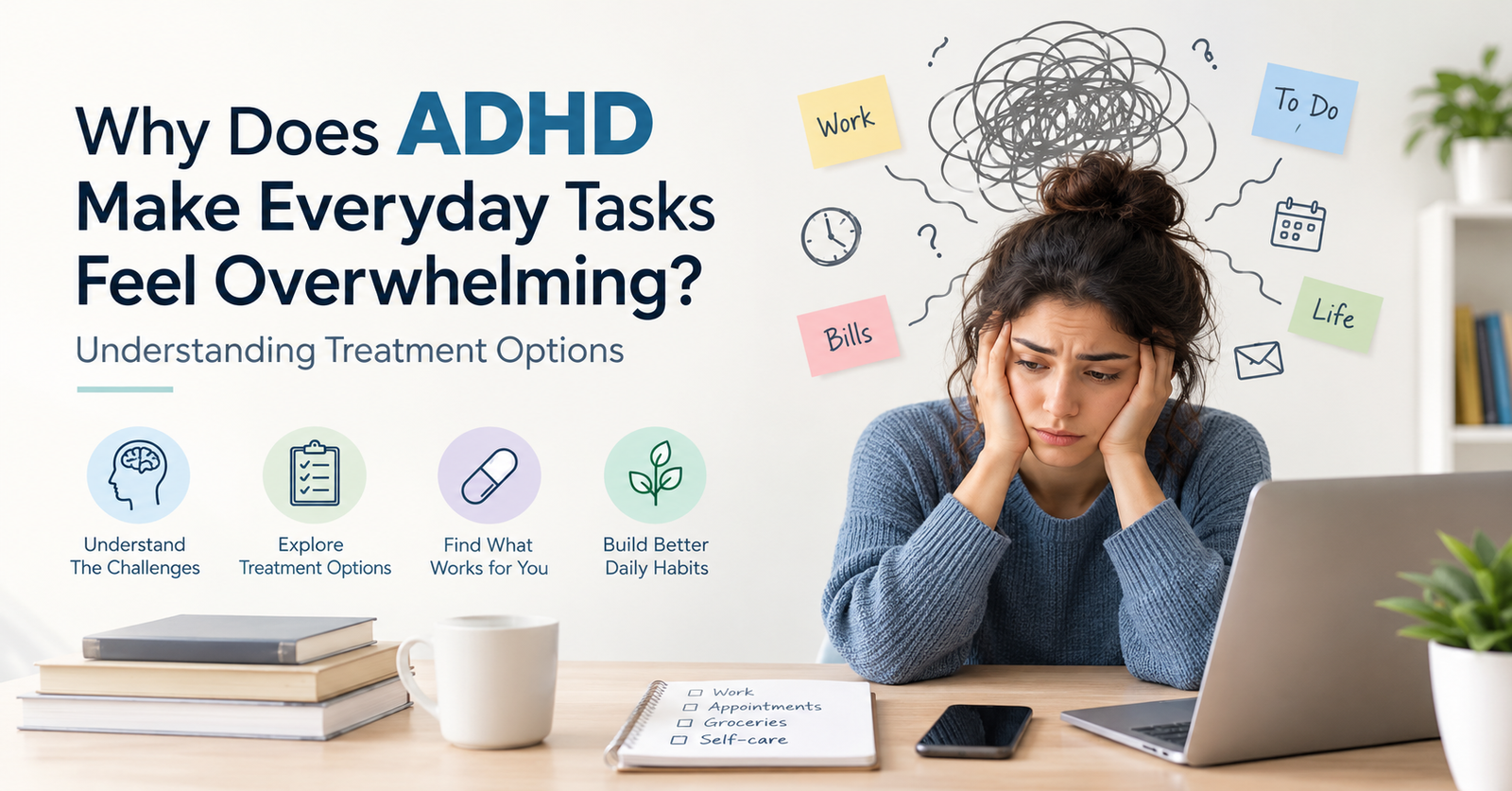
Living with attention-deficit/hyperactivity disorder (ADHD) can make ordinary responsibilities feel surprisingly difficult. Replying to emails, organizing a room, preparing a meal, paying bills, or starting a work assignment may require more mental effort than expected. Even when a person understands what needs to be done, getting started and following through can remain challenging.
If everyday tasks frequently leave you feeling frustrated, mentally exhausted, or behind schedule, ADHD may be one factor worth understanding. ADHD can affect attention, planning, time management, impulse control, and the ability to regulate activity. These challenges are not simply a sign of laziness or a lack of motivation.
The good news is that ADHD treatment options, practical organizational strategies, and appropriate support can help people manage daily responsibilities more effectively. The right approach depends on symptoms, personal circumstances, medical history, and whether other conditions—such as anxiety, depression, or sleep difficulties—are also present.
This guide explains why ADHD can make daily life feel overwhelming, how chronic stress may contribute, and which treatment approaches are worth discussing with a qualified healthcare professional.
What Is ADHD, and How Can It Affect Everyday Life?
ADHD is a neurodevelopmental condition that begins during childhood and may continue into adulthood. It can affect how a person manages attention, activity levels, and impulsive behavior.
According to the Centers for Disease Control and Prevention (CDC), adults with ADHD may experience difficulties with organization, completing lengthy tasks, maintaining attention, and managing responsibilities at work or home.
ADHD affects people differently. Some individuals mainly experience inattention, while others struggle more with hyperactivity and impulsivity. Many experience a combination of symptoms.
Everyday difficulties may include:
Forgetting appointments, deadlines, or important items.
Finding it hard to decide which task to complete first.
Starting several activities without finishing them.
Losing track of time while working or using a phone.
Becoming distracted by noise, notifications, or unrelated thoughts.
Delaying tasks that require sustained concentration.
Feeling frustrated when plans change unexpectedly.
These challenges can affect education, employment, relationships, household responsibilities, and personal well-being.
Importantly, occasional distraction or procrastination does not automatically mean someone has ADHD. A diagnosis requires an appropriate clinical assessment, including consideration of symptoms, developmental history, and other possible explanations.
For additional information about symptoms and diagnosis, read the National Institute of Mental Health's ADHD guide.
Why Does ADHD Make Simple Tasks Feel So Overwhelming?
A task that looks simple to someone else may involve several separate mental steps for a person with ADHD. The challenge is not always understanding the task. It may be organizing the steps, deciding where to begin, maintaining attention, and remembering what comes next.
1. Difficulty Breaking Tasks Into Smaller Steps
Consider the task of cleaning a bedroom. It may involve picking up clothes, sorting laundry, clearing a desk, organizing belongings, and taking out the rubbish.
Someone with ADHD may see the entire task at once and struggle to identify a starting point. When every step seems equally important, the task can feel too large to manage.
What may help: Break the activity into small, specific actions. Instead of writing “clean my room,” start with “put dirty clothes in the laundry basket.” Complete one action before choosing the next.
2. Problems With Planning and Prioritization
A long list of responsibilities can create uncertainty about what deserves attention first. You may spend time deciding what to do rather than actually doing it.
This can become especially frustrating when several deadlines are approaching.
Try separating tasks into three groups:
Urgent: Must be completed soon.
Important: Matters but does not require immediate action.
Optional: Can wait or be removed from the list.
Choose one realistic task from the urgent group rather than attempting to tackle everything simultaneously.
3. Difficulty Starting Tasks
Task initiation is a common challenge for some people with ADHD. You might know that an assignment is important, understand its consequences, and genuinely want to complete it—yet still struggle to begin.
The task may appear boring, complicated, repetitive, or emotionally uncomfortable. Thinking about the entire workload can increase resistance.
A useful approach is to make the starting action almost effortless. Open the document, write one sentence, gather the required materials, or work for five minutes.
You do not need to finish the whole task immediately. The first goal is simply to begin.
4. Distractions and Frequent Interruptions
ADHD-related attention difficulties can make it harder to stay focused when several sources of stimulation compete for attention.
A notification may interrupt your work, and checking it may lead to another activity. Returning to the original task then requires additional effort.
Consider putting your phone in another room, turning off nonessential notifications, and keeping only the materials needed for the current activity within reach.
If you find stress and distraction reinforce one another, you may also benefit from reading Prescription24x7's article on stress and procrastination, which explores how feeling overwhelmed can contribute to delaying responsibilities.
5. Forgetfulness and Time-Management Difficulties
You might underestimate how long an activity will take, forget a planned appointment, or remember an important responsibility only when a deadline is close.
These experiences can lead to rushed work and repeated feelings of failure.
External reminders can reduce the need to remember everything mentally. Use a calendar, alarms, written checklists, or a single task-management application. Setting a reminder before a deadline can provide extra time to prepare.
6. Emotional Frustration and Self-Criticism
Repeated difficulties with daily responsibilities can affect confidence. Someone may begin thinking, “Why can everyone else manage this?” or “Why can't I just get things done?”
Over time, frustration and self-criticism can make tasks feel even more intimidating.
Instead of judging yourself, identify the specific obstacle. Is the task unclear? Too large? Boring? Full of distractions? Does it require more time than you have available?
Understanding the barrier helps you choose a practical solution.
Can Chronic Stress Make ADHD-Related Overwhelm Worse?
Yes, chronic stress may make existing attention and organizational difficulties harder to manage.
When responsibilities accumulate, you may spend more time worrying about unfinished work. Worry can compete with the attention needed to complete tasks, while missed deadlines can create additional stress.
This may produce a cycle:
ADHD-related difficulties → unfinished tasks → increased stress → reduced ability to organize and concentrate → more unfinished tasks.
Stress does not automatically cause ADHD, and experiencing overwhelm does not establish an ADHD diagnosis. However, stress, anxiety, sleep problems, and ADHD can overlap and influence daily functioning.
The CDC explains that ADHD symptoms can interfere with everyday responsibilities, particularly when demands increase. Its adult ADHD resource also discusses assessment and treatment options.
If you are frequently anxious, exhausted, irritable, or unable to concentrate, tell your healthcare professional about the full pattern rather than assuming ADHD explains every symptom.
Prescription24x7 also covers related mental-health concerns in its article about when anxiety and depression occur together.
Practical Ways to Make Everyday Tasks More Manageable
Medication is not the only part of ADHD care. Practical adjustments can make responsibilities easier to approach and may complement professional treatment.
Use a Short Daily Task List
Long lists can become overwhelming before you begin. Write down two or three priorities for the day and keep additional tasks on a separate list.
Make each item specific. “Prepare lunch” is more actionable than “get organized.”
Use Timers and Planned Breaks
Try working for a short, manageable period before taking a break. Some people find a 15- or 25-minute work interval helpful, although the best duration varies.
The purpose is to create a clear beginning and end, not to force yourself to concentrate beyond your limits.
Make Tasks Visible
Keep frequently used items in predictable places. Place important reminders somewhere you will see them, and use a calendar for appointments and deadlines.
Visible cues can help compensate for forgetfulness and reduce the effort involved in remembering what to do.
Reduce Unnecessary Decisions
Repeatedly deciding what to eat, wear, or work on can add friction to daily routines.
Preparing a basic schedule, laying out clothes in advance, or planning simple meals can reduce the number of decisions you need to make.
Ask for Practical Support
A trusted friend, family member, colleague, or study partner may help you clarify priorities or stay accountable.
At work or school, written instructions, fewer distractions, planned breaks, and additional organizational support may also help, depending on your circumstances.
These strategies are not a substitute for treatment when ADHD significantly affects your life, but they can provide a useful foundation.
What Are the Treatment Options for ADHD?
ADHD treatment is individualized. Depending on the person's age, symptoms, medical history, and preferences, a treatment plan may include medication, psychological support, behavioral strategies, or a combination of approaches.
The National Institute of Mental Health's ADHD information describes medication, psychotherapy, and behavioral interventions as common treatment approaches.
1. Prescription Medication
Medication may help some people with diagnosed ADHD manage symptoms that interfere with daily functioning.
ADHD medicines include stimulant medications, such as methylphenidate and amphetamine-based medicines, and non-stimulant options. The choice depends on individual circumstances and should be made with a qualified prescriber.
For eligible patients, medication may help with attention, impulsivity, and other ADHD symptoms. However, it does not automatically teach planning skills, eliminate every distraction, or resolve all emotional difficulties.
A clinician will consider potential benefits, side effects, existing health conditions, and other medicines before recommending a treatment.
Understanding Adderall and ADHD Medication Information
Adderall contains amphetamine and dextroamphetamine and is a prescription stimulant used to treat ADHD in appropriate patients. It is not suitable for everyone and requires medical supervision.
People researching this medicine can review the Adderall category information on Prescription24x7 for general product-related information. The page should not replace a medical assessment, prescribing instructions, or official medication labeling.
Adderall can cause side effects, including reduced appetite, sleep difficulties, nervousness, and increases in heart rate or blood pressure. It also carries risks of misuse, dependence, and other serious complications.
Only use stimulant medication when it has been prescribed to you by an appropriately qualified healthcare professional and dispensed through a legally authorized pharmacy. Do not change doses, share medication, or combine medicines to manage stress without professional guidance.
For further details, consult the U.S. Food and Drug Administration's information on prescription stimulants.
2. Cognitive Behavioral Therapy and Other Psychological Support
Psychological therapy can help people develop practical skills for managing difficult thoughts, emotions, and behaviors.
For adults with ADHD, ADHD-focused cognitive behavioral therapy (CBT) may address procrastination, organization, time management, and unhelpful patterns of self-criticism.
Therapy can also be useful when ADHD occurs alongside anxiety, depression, or persistent stress.
The National Institute of Mental Health's psychotherapy resource explains how therapy can support coping skills and day-to-day functioning.
3. Behavioral and Organizational Strategies
Structured routines, written reminders, task breakdowns, and environmental changes can help reduce everyday obstacles.
For some people, working with an ADHD-informed therapist, coach, or other qualified professional may help translate general advice into routines that fit their needs.
The NHS guide to ADHD in adults discusses medication, lifestyle measures, and talking therapies as possible elements of ADHD management.
4. Treatment for Coexisting Conditions
ADHD may occur alongside anxiety, depression, sleep disorders, or other health conditions. These can contribute to difficulty concentrating and managing responsibilities.
If you have persistent worry, low mood, or sleep problems, a clinician can assess whether an additional condition requires treatment.
Medication used for anxiety or depression is not interchangeable with ADHD medication. Each treatment should address a properly assessed clinical need, and potential interactions must be considered.
For adults whose ADHD continues to cause significant impairment, treatment decisions should follow an individualized assessment. The UK's National Institute for Health and Care Excellence (NICE) ADHD guidance outlines recommendations for medication and non-pharmacological support.
When Should You Seek Professional Help?
Consider arranging an assessment if difficulties with attention, organization, or task completion repeatedly interfere with work, education, relationships, or daily responsibilities.
Professional support is particularly important if:
You have struggled with similar attention or organizational difficulties since childhood.
You regularly miss important deadlines despite trying different strategies.
Everyday tasks cause persistent distress or conflict.
Anxiety, low mood, or sleep problems are becoming difficult to manage.
You are considering medication or experiencing troublesome effects from an existing prescription.
An assessment may include a discussion of your developmental history, current symptoms, daily functioning, medical history, and other possible causes. There is no single symptom or online questionnaire that can independently establish ADHD.
Seek urgent medical assistance for severe or rapidly worsening symptoms, and get immediate support if you feel at risk of harming yourself.
Frequently Asked Questions
Why do people with ADHD struggle with simple tasks?
ADHD can affect attention, planning, time management, working memory, and task initiation. A seemingly simple activity may involve several steps that are difficult to organize or complete consistently.
Is feeling overwhelmed a symptom of ADHD?
Feeling overwhelmed can occur when ADHD-related difficulties interfere with everyday responsibilities. However, overwhelm can also be associated with stress, anxiety, depression, sleep deprivation, and other conditions. A healthcare professional can help identify the cause.
Can ADHD medication make everyday tasks easier?
For some people with diagnosed ADHD, appropriately prescribed medication can reduce symptoms that interfere with daily functioning. Results vary, and medication may work best alongside practical strategies, behavioral support, and regular follow-up.
Can ADHD medication help with stress?
ADHD medication is intended to treat ADHD symptoms, not chronic stress in general. If stress is related to unfinished tasks or attention difficulties, treating ADHD may help with some contributing problems. Persistent stress may require its own assessment and management.
What is the first step if everyday tasks feel impossible?
Start by identifying one specific task and breaking it into a small action. Use a reminder or timer if helpful. If these difficulties are persistent or significantly affect your life, speak with a qualified healthcare professional about assessment and treatment.
Does everyone with ADHD need medication?
No. Treatment depends on symptom severity, daily impairment, personal preferences, medical history, and clinical recommendations. Some people benefit from medication, others from non-medication approaches, and some from a combination.
Conclusion
ADHD can make everyday responsibilities feel overwhelming because organizing, prioritizing, starting, and completing tasks may require additional effort. Repeated unfinished tasks can contribute to frustration and chronic stress, which may make daily challenges feel even more difficult.
The most useful approach is to combine realistic expectations with practical support. Break tasks into smaller actions, reduce distractions, use reminders, and create routines that fit your circumstances. If symptoms continue to interfere with your life, seek a professional assessment to discuss appropriate treatment options.
ADHD is manageable, and struggling with everyday tasks does not mean you lack intelligence, discipline, or potential. With individualized care, effective strategies, and ongoing support, many people can improve daily functioning and build routines that work for them.
For more health-related educational content, visit the Prescription24x7 health blog. Medication information should always complement—not replace—advice from a qualified healthcare professional.