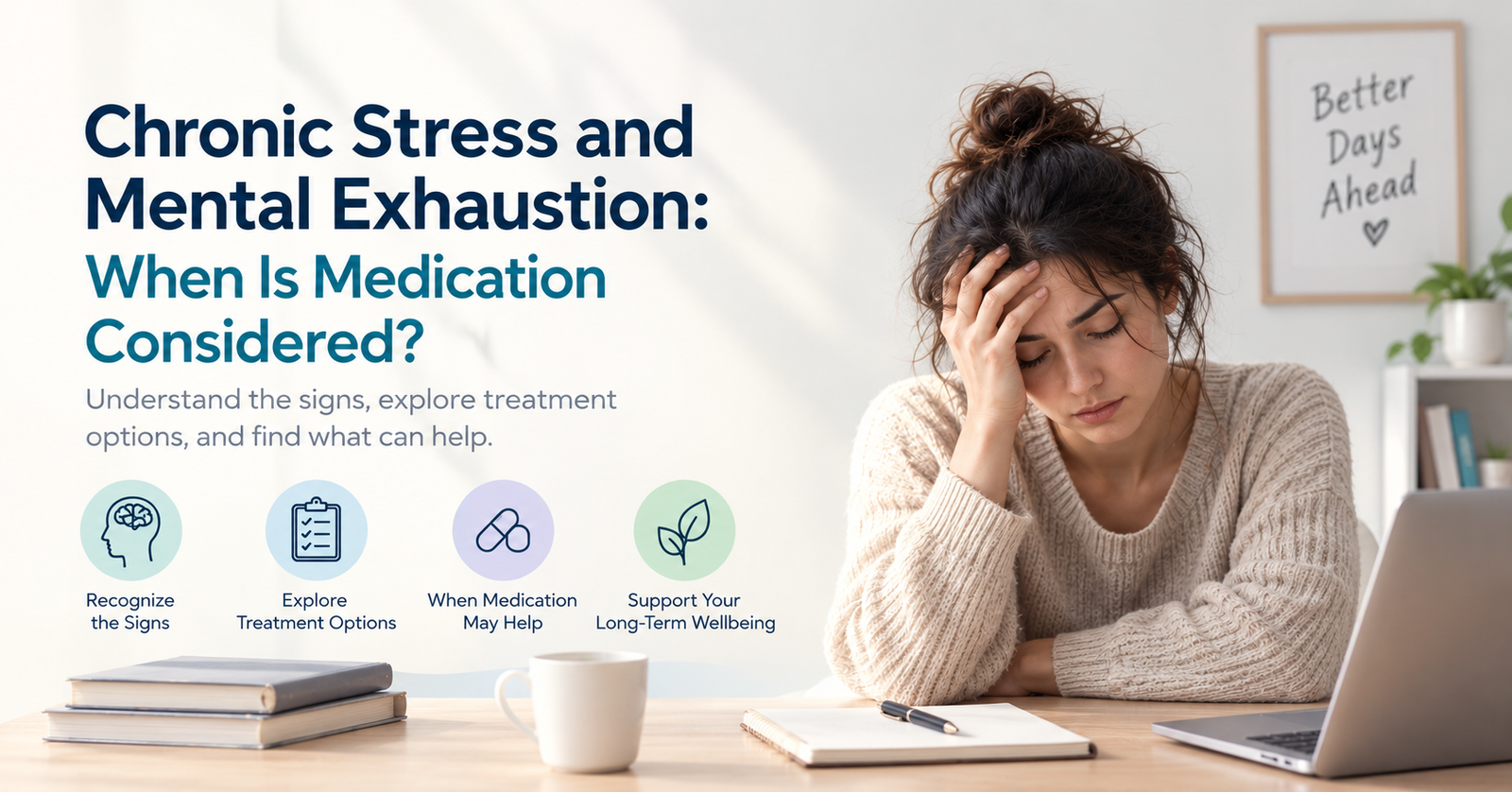
Chronic stress can affect much more than your mood. When pressure from work, financial responsibilities, family concerns, or ongoing personal challenges continues for weeks or months, it may become difficult to concentrate, make decisions, stay motivated, and recover your energy. Even routine activities can begin to feel exhausting.
This persistent feeling of mental depletion is often described as mental exhaustion. You might feel overwhelmed by small decisions, struggle to focus on conversations, become unusually irritable, or wake up feeling tired despite spending enough time in bed.
Although stress is a normal response to demanding situations, prolonged symptoms deserve attention. Medication may be considered when chronic stress is accompanied by a diagnosable condition, such as an anxiety disorder or depression, or when symptoms significantly interfere with daily functioning. However, medication is not automatically necessary for everyone experiencing stress.
Understanding the difference between everyday stress, persistent mental exhaustion, anxiety, and depression can help you make informed decisions about professional support.
In this guide, we explore the signs of chronic stress, why mental exhaustion develops, when medication may be appropriate, and which non-medication strategies can support recovery.
What Is Chronic Stress?
Stress is the body's response to a perceived challenge or demand. Short-term stress can sometimes help you prepare for an examination, meet a deadline, or respond to an unexpected problem.
Chronic stress occurs when pressure continues over an extended period or when opportunities to recover are limited. Common contributing factors include:
Persistent workplace pressure or job insecurity.
Financial difficulties and mounting responsibilities.
Ongoing family or relationship conflicts.
Caring for someone with significant needs.
Long-term uncertainty about personal circumstances.
Repeated exposure to difficult or traumatic situations.
According to MedlinePlus's overview of stress, prolonged stress can affect physical and emotional well-being and may contribute to problems such as anxiety, depression, sleep difficulties, and concentration problems.
The effects are not identical for everyone. Some people experience headaches, muscle tension, or digestive discomfort, while others mainly notice worry, irritability, forgetfulness, or a persistent lack of energy.
Recognizing these changes early can help you identify when additional support may be beneficial.
What Does Mental Exhaustion Feel Like?
Mental exhaustion is not simply feeling tired after a busy day. It can involve a persistent sense that your mind has little capacity left to handle ordinary demands.
You may experience several symptoms at the same time.
1. Difficulty Concentrating
You might read the same paragraph repeatedly, lose track of conversations, or struggle to complete tasks that usually feel manageable.
Stress can occupy attention with worries about what has happened or what might happen next. This can leave fewer mental resources available for other activities.
2. Feeling Overwhelmed by Small Responsibilities
Answering emails, preparing meals, organizing paperwork, or making routine decisions may feel unusually demanding.
When several responsibilities accumulate, it can become difficult to decide where to begin. Delaying tasks may provide temporary relief, but unfinished responsibilities can create further pressure.
If this pattern sounds familiar, you may also find our article on stress and procrastination helpful for understanding how emotional pressure and task avoidance can reinforce one another.
3. Persistent Irritability
Chronic stress may leave you with less patience than usual. Minor interruptions can feel disproportionately frustrating, and interactions with friends, family members, or colleagues may become more difficult.
This does not necessarily mean your personality has changed. It may indicate that you are struggling to manage sustained demands without enough recovery time.
4. Sleep Difficulties
You might feel exhausted during the day but find it difficult to switch off at night. Repetitive thoughts, worries about tomorrow, and physical tension can interfere with sleep.
Poor sleep can then contribute to daytime fatigue, difficulty concentrating, and reduced emotional resilience.
5. Reduced Motivation
Activities you previously enjoyed may begin to feel like obligations. You might postpone hobbies, avoid social situations, or struggle to find the energy to begin tasks.
Persistent loss of interest, low mood, and hopelessness deserve particular attention because they can also occur with depression.
6. Physical Symptoms
Chronic stress may be associated with headaches, muscle tension, digestive discomfort, changes in appetite, and fatigue.
However, these symptoms can also have medical causes. Persistent or unexplained physical symptoms should not automatically be attributed to stress without appropriate assessment.
The NHS guide to stress explains how stress can affect thoughts, emotions, behavior, and physical health.
Why Can Chronic Stress Leave You Mentally Exhausted?
Mental exhaustion often develops through a combination of ongoing pressure, insufficient recovery, disrupted routines, and emotional strain.
Continuous Mental Load
When you are constantly thinking about deadlines, responsibilities, financial concerns, or difficult relationships, your mind may have little opportunity to disengage.
Even when you are not actively working, you may continue mentally rehearsing conversations, anticipating problems, or worrying about unfinished tasks.
Insufficient Recovery
Rest is not only about spending time away from work. Recovery may also require adequate sleep, regular meals, physical activity, supportive relationships, and time without constant demands.
If your schedule leaves little room for these activities, fatigue can accumulate.
Repeated Worry and Overthinking
Worry often creates the impression that a problem is being addressed, even when no practical solution is being developed.
Repeatedly reviewing the same concern can increase distress without producing a decision or meaningful action.
If persistent worry has become difficult to control, consider discussing it with a healthcare professional. Our related article on the overlap between anxiety and depression provides additional context about symptoms that can occur together.
Unresolved Mental Health or Medical Conditions
Sometimes, stress is not the only explanation for exhaustion. Anxiety disorders, depression, sleep disorders, thyroid problems, anemia, and other health conditions may produce overlapping symptoms.
A professional assessment can help distinguish these possibilities and identify appropriate treatment.
When Should You Consider Professional Help?
You do not have to wait until you reach a breaking point before asking for help.
Consider speaking with a qualified healthcare professional if:
Mental exhaustion persists or repeatedly returns.
You struggle to complete everyday responsibilities.
Sleep or appetite changes continue.
You experience persistent anxiety, low mood, or irritability.
You have lost interest in activities you normally enjoy.
Self-help strategies have not provided sufficient relief.
Stress is affecting your relationships, education, or employment.
A clinician may ask about the duration of your symptoms, current stressors, sleep habits, medical history, and any medicines or substances you use.
Depending on your symptoms, the assessment may also explore anxiety, depression, sleep problems, and physical health conditions that could contribute to fatigue.
The goal is not simply to suppress symptoms. It is to understand what is causing them and identify an appropriate way forward.
When Is Medication Considered for Chronic Stress?
Medication is generally considered based on the condition being treated, the severity of symptoms, the effect on daily life, and the person's medical circumstances.
There is no single medication that treats every form of chronic stress or mental exhaustion. When medication is recommended, it is often intended to treat an associated condition rather than everyday stress itself.
1. When Stress Is Accompanied by an Anxiety Disorder
Some people experience persistent and difficult-to-control worry, restlessness, muscle tension, or a sense of impending problems.
If these symptoms meet the criteria for an anxiety disorder, a clinician may discuss psychotherapy, medication, or a combination of both.
Depending on the diagnosis, prescribed options may include certain antidepressants, such as selective serotonin reuptake inhibitors (SSRIs) or serotonin-norepinephrine reuptake inhibitors (SNRIs). Despite their name, some antidepressants are also used to treat anxiety disorders.
These medicines are not instant stress relievers. Benefits may take several weeks to develop, and a prescriber needs to review potential side effects, interactions, and individual suitability.
For further information, see the National Institute of Mental Health's guide to mental health medications.
2. When Symptoms Suggest Depression
Chronic stress can occur alongside depression, although not everyone who experiences prolonged stress develops this condition.
Depression may involve persistent low mood, loss of interest or pleasure, fatigue, changes in sleep or appetite, difficulty concentrating, and feelings of worthlessness or hopelessness.
When a clinician diagnoses depression, treatment may include psychotherapy, antidepressant medication, or both, depending on symptom severity and personal circumstances.
Medication decisions should be based on a full assessment rather than fatigue alone. A clinician may also consider whether physical health problems, sleep disruption, or other factors are contributing to the symptoms.
The NIMH depression resource explains commonly used treatment approaches and how care can be tailored to individual needs.
3. When Symptoms Are Severe or Affect Daily Functioning
When symptoms substantially interfere with work, relationships, sleep, or basic daily activities, a clinician may recommend more structured treatment.
This does not mean medication is always required. The appropriate approach depends on the diagnosis, the duration of symptoms, previous treatments, medical history, and the person's preferences.
Some people benefit from psychotherapy and practical changes alone. Others may need medication alongside therapy and continued follow-up.
4. When Other Conditions Contribute to Exhaustion
A healthcare professional may investigate whether a sleep disorder, chronic pain condition, medication side effect, or another health problem is contributing to mental exhaustion.
Treating an underlying condition may improve fatigue and concentration. Taking a sedating medicine simply to feel calmer, however, may worsen daytime tiredness or create additional risks.
For this reason, treatment should address the cause of symptoms rather than relying on a general idea of stress relief.
Which Types of Medication Might a Clinician Discuss?
The following categories are examples of treatments that may be considered for particular diagnoses. They are not a list of medicines to take for chronic stress on your own.
Medication category | When it may be considered | Important consideration |
SSRIs | Certain anxiety disorders and depression | Benefits may take several weeks; follow-up is important |
SNRIs | Certain anxiety disorders and depression | Side effects and interactions need review |
Other prescribed anxiety treatments | Selected anxiety-related conditions | Suitability depends on the diagnosis and individual risks |
Short-term sedative or anti-anxiety medicines | Limited situations involving significant symptoms | Some can cause sedation, tolerance, dependence, or withdrawal |
Medication for an underlying medical condition | When a medical problem contributes to fatigue or related symptoms | Treatment depends on the underlying diagnosis |
Benzodiazepines are sometimes prescribed for specific anxiety-related circumstances, but they are not routine treatment for everyday stress. They can cause sedation and dependence, and combining them with alcohol, opioids, or other sedating substances can be dangerous.
Similarly, medication used to treat ADHD, sleep disorders, or other conditions should not be used as a general solution for stress-related exhaustion.
If a medication is prescribed, follow the instructions provided and speak with the prescriber before changing the dose or stopping it.
Can Therapy Help Without Medication?
Yes. Psychotherapy is an important treatment option for many people dealing with persistent stress, anxiety, or depression.
Cognitive behavioral therapy (CBT) can help identify unhelpful thinking patterns, develop practical coping skills, and change behaviors that maintain distress.
Depending on your circumstances, therapy may help you:
Recognize situations that repeatedly trigger stress.
Break overwhelming responsibilities into manageable steps.
Challenge unrealistic expectations and excessive self-criticism.
Develop healthier boundaries around work and personal commitments.
Practice problem-solving and relaxation strategies.
Respond differently to repetitive worry.
Therapy does not remove every external stressor, but it can help you respond more effectively to difficult situations.
The NIMH psychotherapy guide explains how talking therapies can help with prolonged stress and emotional difficulties.
Medication and psychotherapy can also be used together when clinically appropriate.
Practical Ways to Manage Mental Exhaustion
Professional treatment can be valuable, but daily habits may also support recovery. Small, realistic changes are often more manageable than attempting to transform your entire routine at once.
Prioritize Sleep
Try to maintain a reasonably consistent sleep and wake schedule. Reduce stimulating activities before bed and avoid relying on alcohol to help you fall asleep.
If sleep problems persist despite changes to your routine, seek medical advice.
Reduce Your Daily Mental Load
Write down responsibilities instead of trying to remember everything. Choose a small number of realistic priorities each day and postpone or delegate tasks when possible.
A shorter list that you can complete may be more helpful than an ambitious list that increases your sense of failure.
Incorporate Movement
Walking, gentle stretching, cycling, or another activity you enjoy may support mood and general well-being.
You do not need an intense exercise routine to begin. Choose a level of activity that is suitable for your health and current energy.
Take Short Breaks
Brief periods away from demanding work can provide an opportunity to reset your attention. Try stepping outside, stretching, listening to calming music, or practicing slow breathing.
The MedlinePlus guide to relaxation techniques describes approaches that may help reduce the physical effects of stress.
Maintain Supportive Connections
Talk with someone you trust about what has been difficult. Social support may help you feel less isolated and identify practical solutions you might not have considered.
If stress comes from ongoing workplace, financial, or family pressures, addressing the source where possible is also important.
Avoid Unhelpful Coping Patterns
Using alcohol or non-prescribed medication to manage emotional distress can create additional health risks. Excessive caffeine may also worsen anxiety or sleep problems in some people.
If you find yourself increasingly relying on substances to cope, consider discussing this openly with a healthcare professional.
How to Prepare for a Medical Appointment
If you decide to seek help, preparing a few notes can make the conversation more useful.
Record when the exhaustion began, how often it occurs, whether it affects sleep or appetite, and which responsibilities have become difficult. Include any medicines, supplements, caffeine, alcohol, or other substances you use.
You can ask your clinician:
Could another health condition be contributing to my exhaustion?
Do my symptoms suggest anxiety, depression, or another condition?
Would therapy, medication, or a combination be appropriate?
What benefits and side effects should I expect from a proposed medicine?
How will we assess whether treatment is helping?
When should I return for follow-up?
These questions can help you understand the available options without feeling pressured to choose a particular treatment.
Frequently Asked Questions
Is medication always necessary for chronic stress?
No. Chronic stress does not automatically require medication. Supportive lifestyle changes, addressing the source of stress, counseling, or psychotherapy may be sufficient for some people. Medication may be considered when an associated condition, such as an anxiety disorder or depression, warrants it.
How do I know whether mental exhaustion is caused by stress?
Stress may contribute to fatigue, difficulty concentrating, irritability, and sleep problems. However, these symptoms can have other psychological or physical causes. If they persist, worsen, or interfere with daily life, seek a professional assessment.
Can antidepressants help with stress-related exhaustion?
Antidepressants may help when a clinician identifies depression or an anxiety disorder for which the medicine is appropriate. They are not general-purpose treatments for ordinary stress, and their benefits and risks should be discussed with a prescriber.
How long does it take to recover from chronic stress?
Recovery varies according to the duration and severity of stress, ongoing circumstances, sleep, health, and available support. Some people improve after reducing pressures and restoring routines, while others need professional treatment. There is no universal recovery timeline.
When should mental exhaustion be treated as urgent?
Seek urgent help if you cannot keep yourself safe, experience thoughts of suicide, or feel unable to cope with immediate danger. Severe confusion, fainting, chest pain, or other potentially serious physical symptoms also require prompt medical evaluation.
Conclusion
Chronic stress and mental exhaustion can make ordinary responsibilities feel difficult and leave you with less energy for work, relationships, and activities you normally enjoy. Persistent symptoms should not be dismissed as a personal weakness or something you simply have to tolerate.
Medication may be considered when an assessment identifies an anxiety disorder, depression, or another condition for which medication is appropriate. However, treatment is individualized, and psychotherapy, practical changes, adequate rest, and support can also play important roles.
If exhaustion is persistent or affecting your daily functioning, speak with a qualified healthcare professional to understand its cause and discuss suitable options.
For more health education and related resources, visit Prescription24x7 and its health blog. Online health information can help you prepare for a conversation with a clinician, but it should not replace a personal medical assessment.