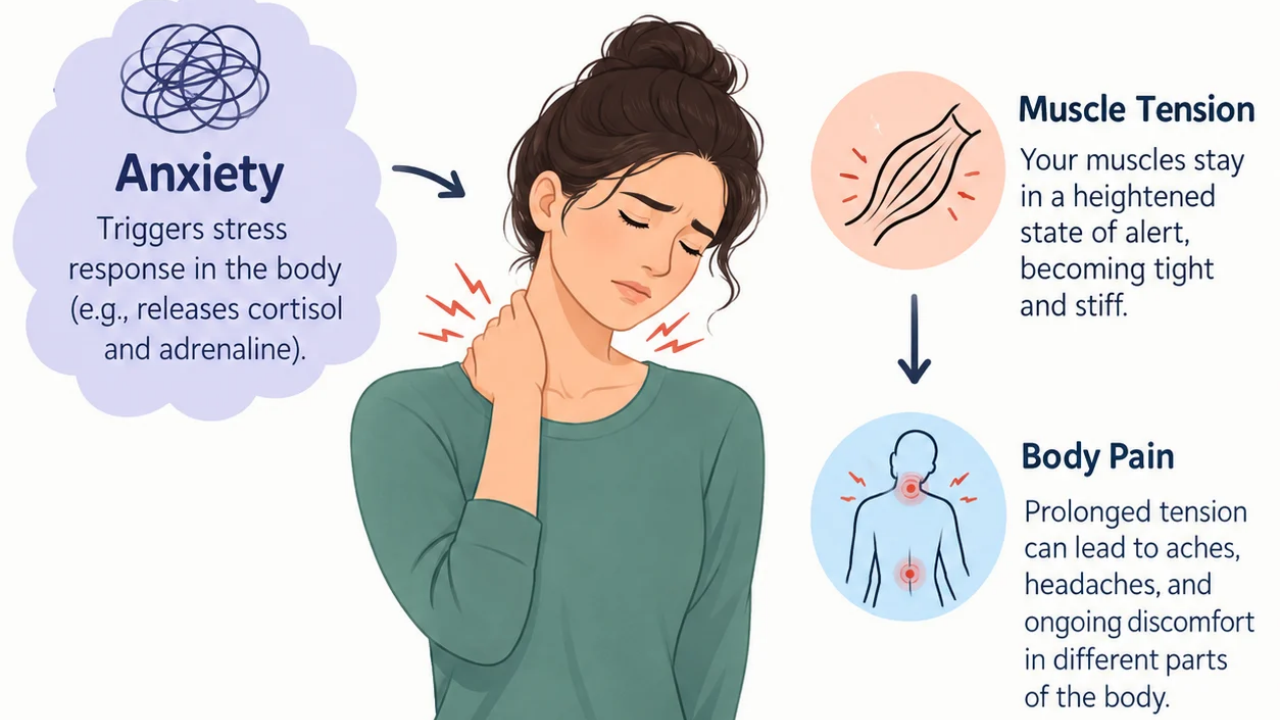
Anxiety is often thought of as an emotional or psychological problem, but its effects can be surprisingly physical. Persistent anxiety may contribute to muscle tension, headaches, neck and shoulder discomfort, fatigue, sleep problems, and generalized aches.
For someone experiencing anxiety regularly, the physical symptoms can sometimes become as noticeable as the worrying itself. You may find yourself constantly tightening your shoulders, clenching your jaw, experiencing a stiff neck, or feeling soreness throughout your body.
The connection between anxiety and physical pain is not imaginary. The nervous system, muscles, brain, emotions, and pain pathways are closely connected. The National Institute of Mental Health (NIMH) lists muscle tension, muscle aches, headaches, fatigue, sleep difficulties, trembling, and twitching among physical symptoms that may occur with generalized anxiety disorder.
Understanding this connection can make it easier to recognize what your body may be experiencing and determine when professional medical evaluation is appropriate.
How Anxiety Can Cause Muscle Tension
When the brain perceives a threat, the body activates its fight-or-flight response. This is an automatic survival mechanism designed to prepare you to respond quickly.
Your heart rate may increase, breathing may become faster, blood flow changes, and muscles can tighten.
The NIH's MedlinePlus explains that anxiety can activate the fight-or-flight response, causing muscles to tense as the body prepares to respond to a perceived threat. NIH MedlinePlus: Anxiety – What You Need to Know
The important point is that your brain does not necessarily need to detect a physical danger for this response to occur.
A stressful conversation, financial concern, health worry, work problem, relationship difficulty, or frightening thought can trigger a similar physical reaction.
If anxiety occurs repeatedly, your muscles may spend long periods in a partially contracted state.
Over time, this may contribute to stiffness, soreness, fatigue, or discomfort.
Why Chronic Stress Can Keep Your Muscles Tense
Short-term stress is normal and can even be useful. It helps your body respond to challenges.
The problem is long-lasting stress.
According to MedlinePlus, chronic stress can cause the body to remain in a state of heightened alertness. Stress hormones can make muscles tense and may contribute to fatigue and sleep difficulties. MedlinePlus: Stress and Your Health
Imagine spending an entire day worrying about something.
You may not consciously notice that your shoulders are elevated or that you're clenching your jaw. But several hours later, you may develop:
This is one reason people sometimes say, "I didn't realize how tense I was until I finally relaxed."
Where Does Anxiety-Related Muscle Pain Usually Occur?
Anxiety can affect muscles throughout the body, but certain areas are particularly common.
Neck and shoulders
The neck and shoulders frequently become tense during periods of stress.
People may unconsciously raise their shoulders, tighten their neck muscles, or maintain a rigid posture while concentrating or worrying.
This can contribute to stiffness and discomfort.
Jaw and face
Some people clench or grind their teeth when stressed.
Persistent jaw tension may contribute to facial soreness and headaches. If jaw pain or tooth damage is occurring, a dentist or healthcare professional can help determine whether teeth grinding or another condition is involved.
Upper back
The upper back can become uncomfortable when the shoulders remain tense for long periods.
Poor posture, prolonged computer use, and reduced physical activity can add to the problem.
Lower back
Anxiety may contribute to back discomfort through muscle tension, changes in activity, poor sleep, and increased sensitivity to pain.
However, persistent back pain should not automatically be blamed on anxiety. Musculoskeletal injuries and other medical conditions can also cause back pain.
Can Anxiety Cause Body Aches?
Yes, anxiety can be associated with generalized aches and physical discomfort.
NIMH specifically identifies muscle aches and other physical symptoms among possible manifestations of generalized anxiety disorder. NIMH: Generalized Anxiety Disorder
However, body aches have many possible causes.
For example, infections, medication effects, physical overexertion, inflammatory conditions, nutritional problems, sleep deprivation, and other medical conditions can produce muscle pain.
Therefore, it is important not to assume that unexplained or persistent pain is automatically caused by anxiety.
The Anxiety–Muscle Tension–Pain Cycle
One of the most useful ways to understand the connection is through a cycle:
Anxiety → Muscle tension → Pain or discomfort → Worry about the symptoms → Increased anxiety → More muscle tension
For example, someone might notice a tight shoulder.
They become concerned:
"Why is my shoulder hurting?"
They start paying closer attention to the sensation.
Then they worry:
"What if something is seriously wrong?"
That worry increases anxiety, which can cause additional muscle tension.
The physical sensation then becomes even more noticeable.
This does not mean the pain is imaginary. It means that anxiety and physical sensations can influence each other.
How Anxiety Can Affect the Way You Experience Pain
Pain is more complicated than simply detecting tissue damage.
The National Institute of Neurological Disorders and Stroke (NINDS) describes pain as both a sensory and emotional experience. It also explains that emotions, mood, mental health, and pain can influence one another because some of the brain systems involved overlap. NINDS: Pain
This helps explain why anxiety can make an existing painful condition feel more difficult to manage.
Someone who is calm and well-rested may experience discomfort differently from someone who is exhausted, frightened, and constantly focused on the sensation.
This does not mean the pain isn't real.
It means that the nervous system and brain are involved in how pain is interpreted and experienced.
Anxiety Can Increase Awareness of Physical Sensations
Anxiety can make people highly attentive to their bodies.
You might suddenly notice:
A small muscle twitch
A tight shoulder
A headache
A tingling sensation
A sore muscle
A change in breathing
Normally, the brain may ignore many of these sensations.
When you're anxious, however, you may repeatedly check your body for signs of danger.
This can make ordinary sensations feel much more significant.
Health anxiety can make this cycle particularly difficult because physical sensations themselves become triggers for additional worry.
Depression and Muscle Pain Can Occur Together
The relationship becomes even more complicated when depression is also present.
Depression isn't limited to sadness.
According to NIMH, depression can include fatigue, low energy, sleep difficulties, concentration problems, and physical aches or pains without a clear physical cause. NIMH: Depression
This means someone experiencing both anxiety and depression may experience several overlapping symptoms:
Muscle tension
Body aches
Fatigue
Poor sleep
Headaches
Reduced motivation
Restlessness
Difficulty concentrating
Pain can also negatively affect emotional well-being.
NINDS explains that chronic pain can contribute to anxiety, depression, frustration, hopelessness, and other emotional difficulties, while mental health and emotional factors can also influence a person's experience of pain. NINDS: Pain
Why Poor Sleep Can Make the Problem Worse
Sleep is an important part of the anxiety-pain relationship.
Anxiety can make it difficult to fall asleep or stay asleep. At the same time, inadequate sleep can leave you fatigued and make it harder to cope with physical discomfort.
This can create another cycle:
Anxiety → Poor sleep → Fatigue → Increased discomfort → More worry → Anxiety
NIMH identifies sleep difficulties and fatigue among symptoms that may occur with generalized anxiety disorder. NIMH: Generalized Anxiety Disorder
Improving sleep therefore isn't simply about feeling more rested. It can also be an important component of managing overall mental and physical well-being.
Can Relaxation Help Muscle Tension?
Relaxation techniques may be useful for people experiencing stress-related muscle tension.
MedlinePlus describes techniques such as progressive muscle relaxation, deep breathing, guided imagery, and biofeedback as approaches that can promote relaxation and reduce muscle tension. MedlinePlus: Improving Mental Health
Progressive muscle relaxation
This technique involves deliberately tightening and relaxing different muscle groups.
For example, you might gently tense your shoulders for a few seconds and then consciously release them.
The goal is to help you recognize the difference between tension and relaxation.
Slow breathing
Slow, comfortable breathing can help create a calmer physical state.
Rather than forcing extremely deep breaths, focus on breathing slowly and comfortably.
Mindfulness
Mindfulness involves paying attention to the present moment without automatically reacting to every thought or physical sensation.
This can be particularly useful for people who constantly monitor their bodies for signs of illness.
Can Exercise Help Anxiety-Related Muscle Pain?
Regular physical activity can be beneficial for both physical and mental health.
NINDS notes that physical therapy and physical activity—including low-impact cardiovascular activity, mobility, flexibility, and strength training—can be useful components of pain management for some people. NINDS: Pain
However, the right type and amount of activity depends on the individual.
If you have significant pain, an injury, weakness, or another medical condition, it's better to discuss an appropriate exercise program with a healthcare professional or physical therapist.
Starting gradually is often more practical than suddenly beginning an intense workout routine.
Can Treating Anxiety Reduce Muscle Tension?
It can, particularly when anxiety is an important contributor to the tension.
Treatment for anxiety may include psychotherapy, lifestyle strategies, relaxation techniques, and medication when clinically appropriate.
Cognitive behavioral therapy (CBT) is one commonly used form of psychotherapy for anxiety. MedlinePlus notes that CBT can be effective for generalized anxiety disorder. MedlinePlus: Generalized Anxiety Disorder
The goal isn't necessarily to eliminate every anxious thought.
Instead, treatment can help people recognize anxiety, respond differently to worrying thoughts, reduce avoidance, and develop healthier coping strategies.
What About Medication?
Medication may be appropriate for some people with anxiety or depression, but the choice depends on the specific diagnosis and individual circumstances.
Healthcare professionals may consider different medication classes depending on symptoms, medical history, other medicines, and potential risks.
It is important not to self-medicate for anxiety-related muscle pain.
Some medications used for anxiety, sleep, or pain can cause sedation, dependence, withdrawal symptoms, or potentially dangerous interactions.
A healthcare professional should determine whether medication is appropriate and how it should be used.
When Should Muscle Pain Be Checked by a Doctor?
Not every muscle ache is caused by anxiety.
Consider speaking with a healthcare professional if your pain:
Persists for an extended period
Keeps getting worse
Is severe or unexplained
Interferes with sleep
Interferes with work or daily activities
Is associated with weakness or numbness
Develops after an injury
Occurs with fever or other concerning symptoms
Sudden severe symptoms such as significant chest pain, severe breathing difficulty, sudden weakness, or other emergency symptoms require urgent medical attention.
A healthcare professional may consider both physical and psychological contributors rather than assuming the symptoms are caused by one factor.
How to Break the Anxiety and Muscle Pain Cycle
A practical approach may involve addressing several areas at the same time:
1. Address the anxiety
Identify recurring worries and consider professional treatment if anxiety is persistent or interfering with daily life.
2. Notice muscle tension
Pay attention to whether you are unconsciously clenching your jaw, tightening your shoulders, or holding your breath.
3. Move regularly
Gentle movement and appropriately prescribed exercise can help prevent prolonged inactivity.
4. Prioritize sleep
Maintain a consistent sleep schedule and address persistent insomnia with a healthcare professional.
5. Practice relaxation
Try breathing exercises, progressive muscle relaxation, mindfulness, or other relaxation techniques.
6. Avoid constantly checking symptoms
Repeatedly monitoring your body can sometimes increase anxiety. Instead, acknowledge the sensation without immediately assuming the worst.
7. Get persistent pain evaluated
Treating anxiety should not replace medical evaluation of unexplained or persistent physical symptoms.
Final Thoughts
Anxiety can affect the body just as significantly as it affects the mind.
Persistent anxiety can activate the body's stress response, contributing to muscle tension, headaches, aches, fatigue, and sleep problems. NIMH: Generalized Anxiety Disorder
At the same time, chronic pain can contribute to anxiety and depression, creating a cycle that affects physical health, mood, sleep, and everyday functioning. NINDS: Pain
The good news is that this cycle can often be addressed from multiple directions.
Treating anxiety, improving sleep, maintaining appropriate physical activity, learning relaxation techniques, and obtaining professional support when necessary can all play a role.
Most importantly, don't dismiss persistent pain as "just anxiety." Anxiety can contribute to genuine physical symptoms, but other medical conditions can cause similar problems. Getting the right evaluation is the best way to understand what's happening and choose an appropriate treatment plan.
Frequently Asked Questions
Can anxiety cause muscle pain?
Yes. Anxiety can be associated with muscle tension, muscle aches, headaches, and other physical symptoms. NIMH: Generalized Anxiety Disorder
Can anxiety cause neck and shoulder pain?
Yes. Persistent muscle tension associated with stress or anxiety may contribute to neck and shoulder discomfort. However, other causes should be considered if pain is persistent or severe.
Can anxiety cause pain throughout the body?
Anxiety can be associated with generalized aches and muscle discomfort, but widespread pain can have many causes and should be evaluated when persistent.
Can depression cause muscle aches?
Depression can include physical aches or pains, along with fatigue, sleep changes, and low energy. NIMH: Depression
Can stress make existing muscle pain worse?
Stress can increase muscle tension and may make existing discomfort more difficult to manage. MedlinePlus: Pain and Your Emotions
Does relaxing your muscles help anxiety?
Relaxation techniques such as progressive muscle relaxation and slow breathing may help reduce physical tension and promote relaxation. MedlinePlus: Improving Mental Health
Should I see a doctor for anxiety-related muscle pain?
If pain is persistent, severe, unexplained, worsening, or interfering with your daily life, medical evaluation is appropriate. A healthcare professional can assess both physical and psychological factors.