Introduction
Living with persistent pain can affect much more than the body. When pain continues for weeks or months, it may interfere with sleep, exercise, work, relationships, concentration, and everyday activities. These changes can gradually affect emotional well-being.
Depression can also involve physical symptoms such as fatigue, sleep problems, reduced activity, and body aches. When depression and persistent pain occur together, each problem may make the other harder to manage.
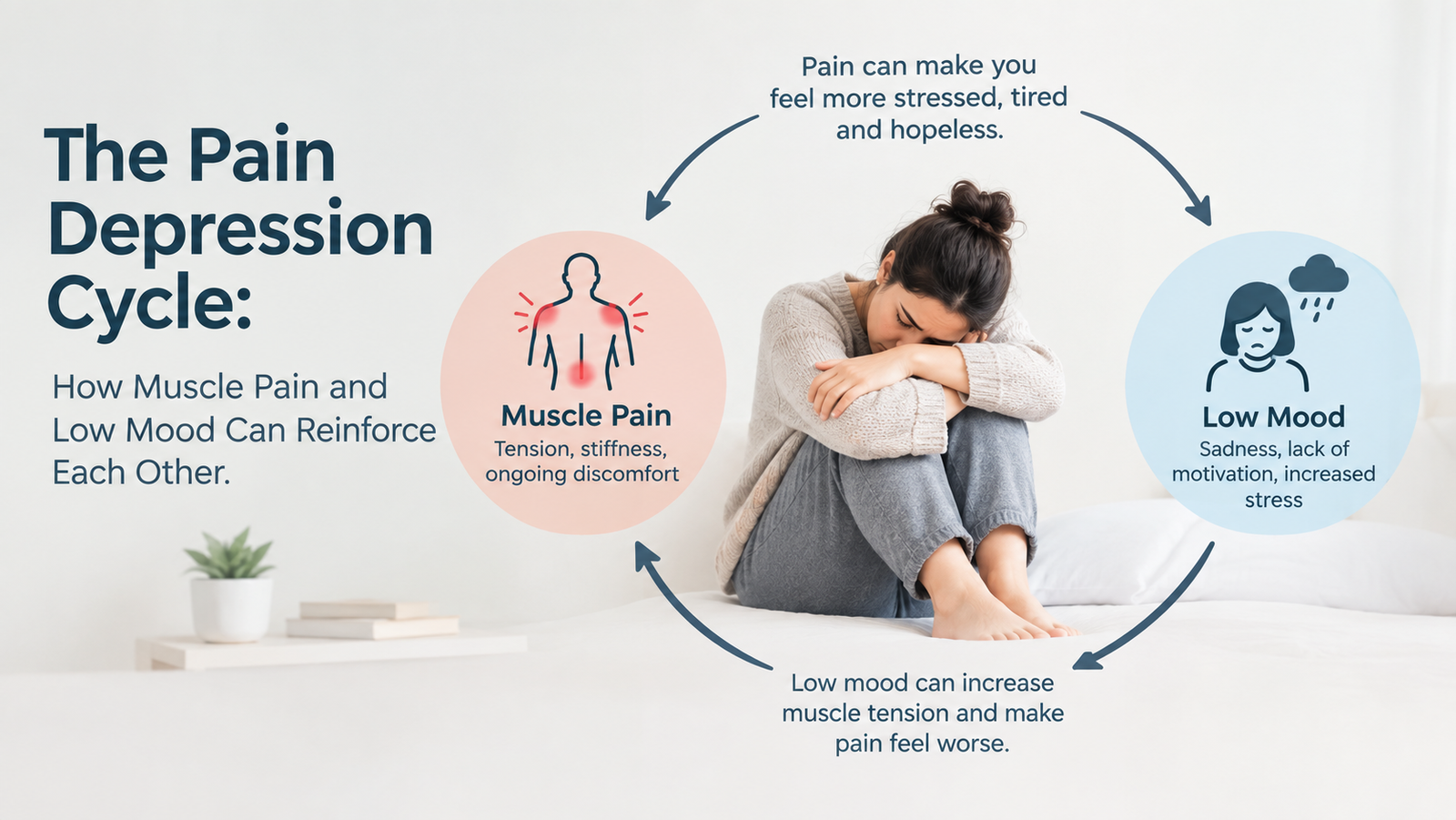
This interaction is often described as the pain depression cycle.
The relationship is complex. Pain does not automatically cause depression, and depression does not mean that physical pain is imaginary. Instead, several factors—including sleep, pain interference, activity levels, negative pain-related thinking, and feelings of helplessness—may contribute to the connection.
A 2026 systematic review examining 29 studies involving 13,587 people identified several potential mediators between pain and depressive symptoms, including pain catastrophizing, helplessness, sleep quality, pain self-efficacy, and pain interference. The researchers emphasized that the evidence remains preliminary and that many studies cannot establish cause and effect.
Understanding this relationship can help people recognize why addressing both physical symptoms and emotional health may be important.
What Is the Pain Depression Cycle?
The pain depression cycle describes a potentially self-reinforcing relationship between persistent physical pain and changes in mood.
A simplified example looks like this:
Pain → poor sleep → fatigue → reduced activity → emotional distress → depression → greater difficulty coping with pain → more pain
The cycle does not occur in exactly the same way for everyone.
For example, someone may develop chronic back pain after an injury. Sleeping becomes uncomfortable, resulting in several nights of poor sleep. The resulting fatigue makes exercise and normal activities more difficult.
The person may then begin avoiding social activities or hobbies.
Over time, reduced activity and isolation can contribute to frustration, sadness, anxiety, or hopelessness.
Meanwhile, constantly focusing on the pain may make symptoms feel even more intrusive.
According to MedlinePlus, chronic pain can affect mood, sleep, relationships, and daily activities, demonstrating why persistent pain can have effects beyond the physical sensation itself.
MedlinePlus: Chronic Pain
How Chronic Pain Can Affect Mental Health
Occasional pain and persistent pain can have very different effects on daily life.
Chronic pain may interfere with:
Work and productivity
Exercise
Sleep
Family responsibilities
Social activities
Concentration
Hobbies
Independence
Emotional well-being
A person dealing with persistent pain may begin asking:
"How long will this continue?"
"Will I ever feel normal again?"
"Why can't I do the things I used to do?"
"What if the pain gets worse?"
"Why doesn't treatment seem to work?"
These thoughts can increase emotional distress.
Importantly, experiencing depression alongside pain does not mean the pain is psychological or imagined. Both conditions can be genuine medical problems requiring appropriate assessment.
A large 2025 systematic review and meta-analysis involving more than 347,000 people found that clinically significant symptoms of depression and anxiety were common among adults with chronic pain, although prevalence varied considerably by pain condition and population.
Can Depression Make Muscle Pain Worse?
Depression can include physical symptoms such as aches, headaches, fatigue, and sleep disturbances.
Depression may also change behavior. Someone experiencing depression may:
These changes may make an existing pain condition more difficult to manage.
However, it is important not to assume that every case of muscle pain is caused by depression. Persistent or unexplained pain deserves an appropriate medical evaluation.
The Role of Sleep in the Pain Depression Cycle
Sleep is one of the most important links between pain and depression.
Pain can make it difficult to fall asleep or stay asleep. Poor sleep can then contribute to fatigue, irritability, reduced activity, and difficulty coping with discomfort.
The process may look like:
Pain → disrupted sleep → daytime fatigue → reduced activity → lower mood → greater difficulty coping with pain
Research supports a meaningful relationship between these factors.
A 2023 systematic review and meta-analysis included 49 studies involving 120,489 people and found that sleep disturbance partially mediated the association between depression and chronic pain. The authors also noted that reverse causation remains possible.
A separate 2024 systematic review involving more than 116,000 participants found evidence of a bidirectional relationship between sleep problems and chronic musculoskeletal pain, although the certainty of evidence varied across different outcomes.
For additional information about sleep-related health concerns, readers can also consult:
MedlinePlus: Sleep Disorders
Pain, Sleep, and Muscle Tension
Muscle tension may become particularly noticeable when someone is stressed, inactive, or sleeping poorly.
For example, someone with persistent neck or shoulder discomfort may sleep poorly because certain positions increase discomfort. The resulting fatigue can increase muscle tension and make normal physical activity feel more difficult.
This does not mean sleep problems are always the original cause.
Instead, pain and sleep can influence each other over time.
Research into chronic musculoskeletal pain supports this bidirectional relationship, meaning that sleep problems may contribute to pain risk while pain can also contribute to sleep problems.
Pain Catastrophizing and Negative Pain-Related Thinking
Another factor researchers have investigated is pain catastrophizing.
Pain catastrophizing refers to patterns of thinking in which a person becomes highly focused on pain, expects negative consequences, or feels unable to cope with symptoms.
Examples might include:
"This pain is never going to improve."
"Any movement will make everything worse."
"I won't be able to live normally again."
These thoughts can increase fear and avoidance.
The 2026 systematic review mentioned earlier identified pain catastrophizing as one of the most consistently supported potential mediators in the relationship between chronic pain and depressive symptoms. However, the researchers also emphasized substantial limitations in the existing evidence.
Psychological approaches can therefore be useful as part of comprehensive pain management. This does not mean denying physical pain. Instead, the goal can be to improve coping, reduce fear and avoidance, and support everyday functioning.
Why Pain Can Lead to Reduced Activity
Pain can change the way people behave.
Someone with knee pain may stop walking. A person with back pain may avoid exercise. Someone with shoulder pain may avoid lifting objects.
Some activity restrictions can be appropriate during an acute injury. However, prolonged avoidance may contribute to reduced physical conditioning and social isolation.
The objective is not to ignore pain or "push through" severe symptoms.
Instead, depending on the diagnosis, healthcare professionals may recommend appropriate movement, physical therapy, rehabilitation, pacing, or gradual return to activity.
Where Medication Fits Into the Pain Depression Cycle
Medication may be appropriate for some causes of pain, depression, anxiety, insomnia, or muscle-related symptoms. However, the medication depends on the diagnosis and individual circumstances.
For example, gabapentin is used for certain seizure disorders and some types of nerve pain.
Prescription24x7's educational category for gabapentin provides information about the medication and its different strengths:
Prescription24x7 Gabapentin Category
Gabapentin should not be considered a general treatment for depression simply because it may be prescribed for certain pain conditions.
The FDA has also warned about serious breathing problems associated with gabapentin and pregabalin in people with certain risk factors, particularly when these medicines are combined with opioids or other central nervous system depressants.
FDA: Gabapentin and Pregabalin Safety Communication
Medication should therefore be used according to a healthcare professional's instructions.
Muscle Relaxants and Pain
Some muscle relaxants are prescribed for specific acute musculoskeletal conditions.
Carisoprodol, for example, is a prescription skeletal muscle relaxant used for certain acute musculoskeletal problems. Prescription24x7 provides a medication category with information about carisoprodol:
Prescription24x7 Carisoprodol Category
Because centrally acting medications can cause sedation and other adverse effects, they should be used only as directed by a qualified healthcare professional.
It is also important to remember that reducing muscle pain with medication does not automatically address depression, sleep disturbance, fear of movement, or other factors that may be maintaining the pain depression cycle.
Treating Depression When It Occurs With Pain
When depression occurs alongside chronic pain, treating the mood disorder may become an important part of overall care.
Depression treatment can include psychotherapy, medication, lifestyle interventions, or combinations of these approaches depending on the person's diagnosis and circumstances.
Prescription24x7 also has an educational category for escitalopram, commonly known by the brand name Lexapro:
Prescription24x7 Lexapro Category
Antidepressants should not be started, stopped, or changed without medical guidance.
Research also suggests that interventions targeting depressive symptoms can be relevant in people living with chronic pain, although the evidence differs between specific interventions and pain conditions.
National Institute of Mental Health: Depression
Anxiety, Pain, and the Broader Emotional Cycle
Pain does not always lead directly to depression.
Some people first experience anxiety about their symptoms. They may worry about what the pain means, whether it will become permanent, or whether movement could make it worse.
That anxiety can lead to avoidance.
Avoidance can reduce physical activity and social interaction, potentially increasing isolation and lowering mood.
Prescription24x7 provides educational medication categories for several prescription anxiety medications, including alprazolam and lorazepam:
Prescription24x7 Xanax/Alprazolam Category
Prescription24x7 Lorazepam/Ativan Category
These medications have important safety considerations, including sedation, dependence, and interactions with other central nervous system depressants. They should only be used under appropriate medical supervision.
Can Improving Sleep Help Break the Cycle?
Sleep can be an important treatment target when chronic pain and depression occur together.
Research into cognitive behavioral therapy for insomnia (CBT-I) in people with chronic pain has found improvements in sleep and, in some studies, pain and depressive symptoms as well.
Another systematic review found that CBT-I improved sleep in people with chronic pain, with some evidence of reductions in pain, anxiety, and depression after treatment, although longer-term evidence was more limited.
This means sleep treatment may be relevant even when pain is the original problem.
How to Break the Pain Depression Cycle
Breaking the pain depression cycle usually requires attention to several factors.
1. Identify the Cause of the Pain
Persistent pain should be evaluated rather than automatically attributed to stress or depression.
Possible causes include:
Nerve-related conditions
Musculoskeletal injuries
Arthritis
Headache disorders
Fibromyalgia
Back conditions
Inflammatory disorders
Previous injuries
Other medical conditions
The appropriate treatment depends on the underlying cause.
2. Address Sleep Problems
Try to establish consistent sleep and wake times and discuss persistent insomnia with a healthcare professional.
If pain repeatedly wakes you, the underlying pain condition may also need to be reassessed.
3. Maintain Appropriate Physical Activity
Depending on the diagnosis, appropriate movement may help maintain strength and function.
A physical therapist can provide individualized recommendations when pain makes normal exercise difficult.
4. Address Unhelpful Pain-Related Thoughts
Cognitive behavioral approaches may help people identify thoughts that increase fear, avoidance, and distress.
The goal is not to deny pain.
It is to develop more useful responses to pain while continuing appropriate medical treatment.
5. Treat Depression When Present
Persistent sadness, loss of interest, hopelessness, fatigue, sleep changes, and concentration problems deserve attention.
Depression should not simply be dismissed as a normal consequence of living with pain.
6. Consider a Multidisciplinary Approach
Chronic pain can involve physical, psychological, behavioral, and social factors.
Depending on the condition, care may involve:
When Should You See a Doctor?
Consider seeking medical evaluation when pain:
Persists for several weeks
Is getting worse
Interferes with sleep
Prevents normal activities
Occurs with numbness or weakness
Appears after an injury
Is accompanied by fever or unexplained weight changes
Begins affecting mood or relationships
Depressive symptoms also deserve professional attention when they persist or interfere with everyday functioning.
If someone is experiencing thoughts of suicide or self-harm, urgent professional or emergency support should be sought.
Frequently Asked Questions
Can chronic pain cause depression?
Chronic pain can contribute to emotional distress and depressive symptoms, particularly when it interferes with sleep, activity, work, relationships, and daily functioning. However, depression has multiple possible causes.
Can depression cause muscle pain?
Physical aches and pains can occur with depression. Depression may also affect sleep, activity, fatigue, and coping, which can make existing pain more difficult to manage.
Does poor sleep make pain worse?
Research supports a two-way relationship between sleep problems and chronic musculoskeletal pain. Sleep disturbance may increase vulnerability to pain, while pain can interfere with sleep.
Is the pain depression cycle the same for everyone?
No. Some people experience pain before depression, while others develop depressive symptoms before or alongside persistent pain. Individual medical conditions, sleep, stress, activity, and social circumstances can all influence the experience.
Can medication alone break the pain depression cycle?
Medication can be useful for specific diagnoses, but it may not address every factor involved. Depending on the person, treatment may also involve physical rehabilitation, psychotherapy, sleep treatment, behavioral strategies, and lifestyle changes.
Final Thoughts
The pain depression cycle demonstrates how closely physical and emotional health can interact.
Persistent pain can disrupt sleep, movement, work, relationships, and enjoyable activities. Those disruptions may contribute to emotional distress and depressive symptoms. At the same time, depression can involve fatigue, poor sleep, reduced activity, and physical discomfort, potentially making existing pain harder to manage.
Current research suggests that sleep quality, pain catastrophizing, helplessness, pain interference, and pain self-efficacy may play roles in this relationship, although researchers continue to investigate the exact mechanisms and timing.
For that reason, addressing both pain and mental health may be important when the two occur together.
Persistent pain should not simply be accepted as something a person has to live with, and depressive symptoms should not be dismissed as merely a reaction to pain. A healthcare professional can help determine the underlying causes and develop an appropriate treatment plan.